



Consumers are placing greater value on transparency, health, origin and product quality, creating new opportunities for retailers that can combine trusted sourcing with a clear in-store proposition.
The market is moving beyond price
For years, supermarket competition focused primarily on operational efficiency and lower prices. That model remains important, but it now operates alongside a growing demand for products associated with health, traceability, sustainability and higher perceived value.Organic and premium products are no longer limited to specialty stores, farmers’ markets or boutique retailers. Consumers increasingly expect to find them during their regular supermarket trips, alongside conventional products and private-label alternatives.For retailers, this shift creates an opportunity to differentiate their stores, strengthen category performance and attract shoppers who are willing to pay more when the product’s value is clear and credible.
Organic food continues to expand
The latest figures confirm that organic food remains a growing category in major markets. In the United States, organic sales reached $71.6 billion in 2024, growing 5.2% year over year—twice the growth rate of the total food market, according to the Organic Trade Association.
Organic Trade AssociationGlobal market estimates vary according to the categories and regions included in each study. Grand View Research estimates that the global organic food and beverage market will reach $329.1 billion in 2026, with a projected compound annual growth rate of 15% through 2033.Grand View Research.
Supermarkets and hypermarkets remain essential distribution channels. Grand View Research estimates that they represented 25.7% of the global organic food and beverage market in 2025. This confirms that organic products are increasingly being purchased through mainstream retail rather than exclusively through specialized outlets.
The categories with the strongest potential
Fresh produce
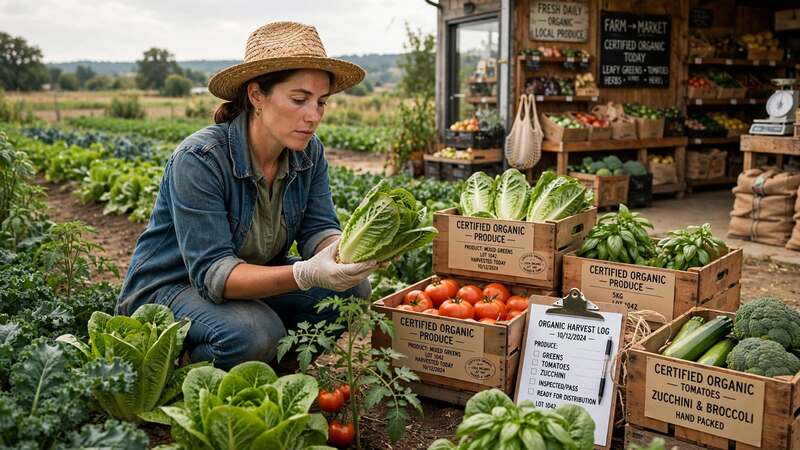
Fruits and vegetables remain one of the most visible entry points into organic food. Shoppers can immediately evaluate freshness, presentation and perceived quality, making this category particularly important for building trust.
Specialty and functional beverages
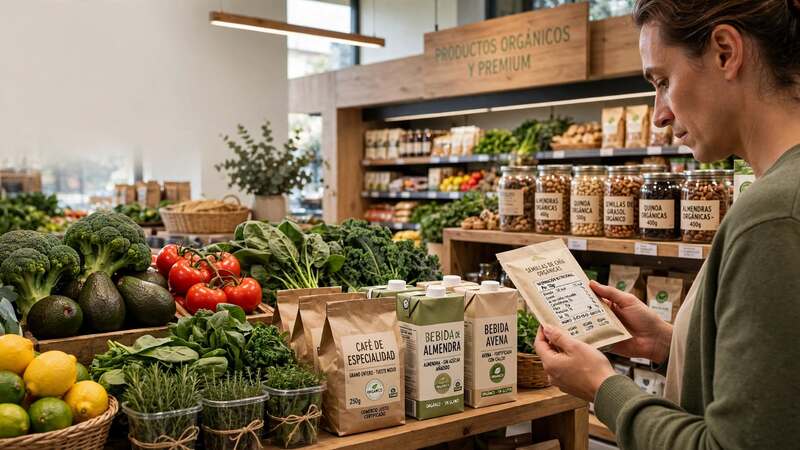
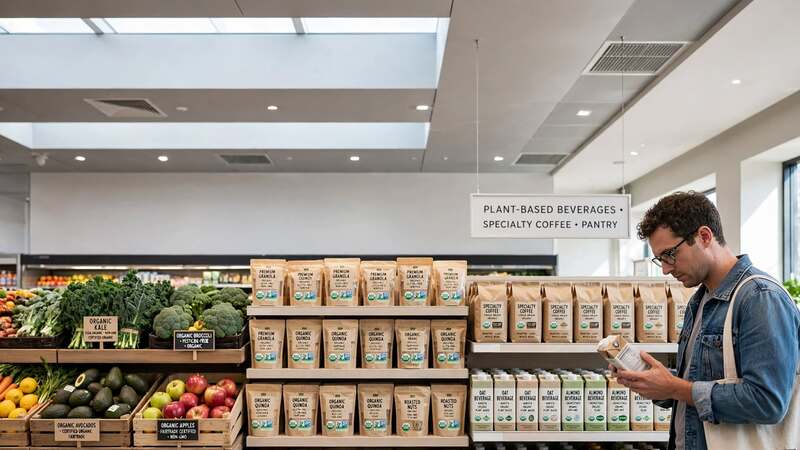
Specialty coffee, organic tea, cold-pressed juices, plant-based beverages and other functional drinks continue to attract consumers who associate these products with wellness, convenience and a more considered lifestyle.
Certified dairy, eggs and proteins
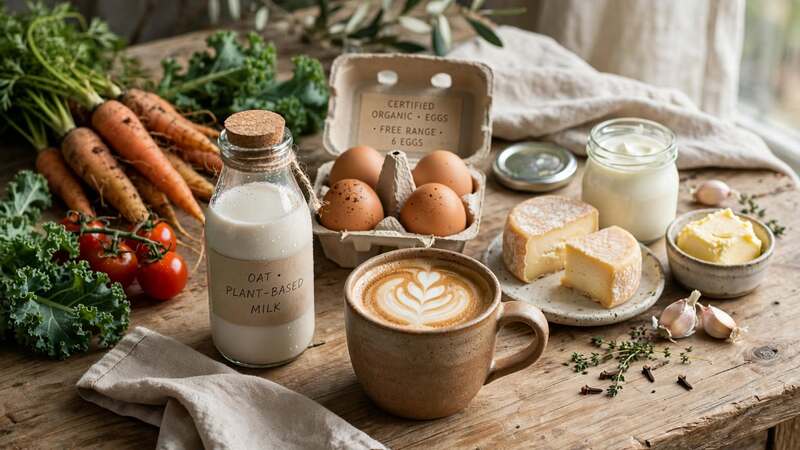
Organic dairy products, pasture-raised eggs and certified meat appeal to shoppers who pay close attention to sourcing, animal welfare and production standards. Certification and clear labeling are essential in these categories because the price difference must be easy to understand.
What today’s shopper expects
The organic and premium shopper is not defined only by income. Purchasing decisions may also be influenced by health concerns, family needs, sustainability, food preferences and trust in the supply chain.
Three factors are especially important:
Clear information
Consumers want short ingredient lists, understandable claims and visible certifications. Labels should explain the product without creating confusion or relying on vague sustainability language.
A credible product story
Origin matters. Products connected to small and mid-sized producers, regional ingredients or distinctive agricultural practices can create a stronger emotional connection when the story is supported by verifiable information.
A clear reason for the price
Consumers may accept a premium when they understand what supports it: certification, quality, origin, production method, packaging, convenience or supply-chain transparency.
How retailers can capture the opportunity
Organize products around consumer needs
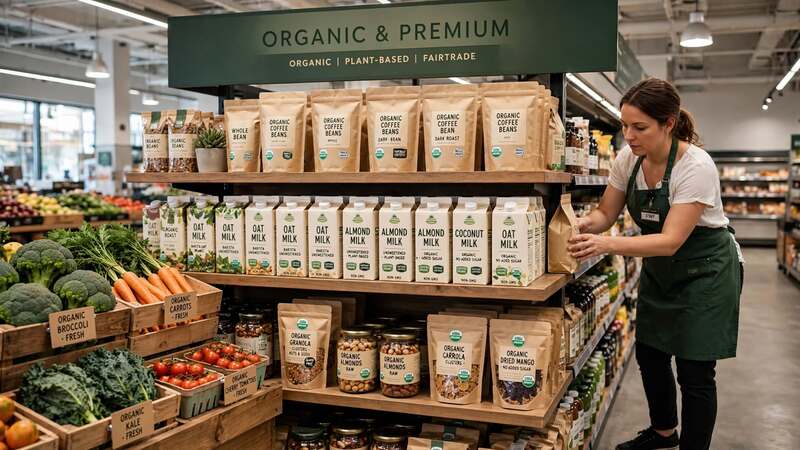
Retailers can create sections based on shopping missions such as healthy breakfast, family nutrition, plant-based eating, wellness or sustainable living. This approach is often more intuitive than separating products only by technical classification.
Build stronger sourcing partnerships
Direct relationships with certified producers, cooperatives and specialized suppliers can improve product availability, reduce unnecessary intermediation and support more competitive pricing.
Use the store as an information platform
Shelf communication, digital labels and QR codes can explain a product’s origin, certification, ingredients and recommended use. The goal is to help shoppers make a confident decision without overwhelming them.
Measure performance beyond sales
Retailers should track sales, margin, rotation, repeat purchase, out-of-stocks and price sensitivity by category. Premium positioning only works when the assortment is available, understandable and commercially sustainable.
A strategic opportunity for retail
The expansion of organic and premium food reflects a broader change in how consumers evaluate products. Price remains important, but it is increasingly considered alongside quality, transparency, origin and trust.
For retailers, the opportunity lies in building an offer that is easy to find, easy to understand and supported by credible information. The strongest propositions will combine reliable supply, relevant categories, clear certification and communication that explains the product’s value.
Organic food is moving deeper into mainstream retail. The retailers best positioned to benefit will be those that treat the category as a long-term business strategy rather than a temporary assortment trend.