




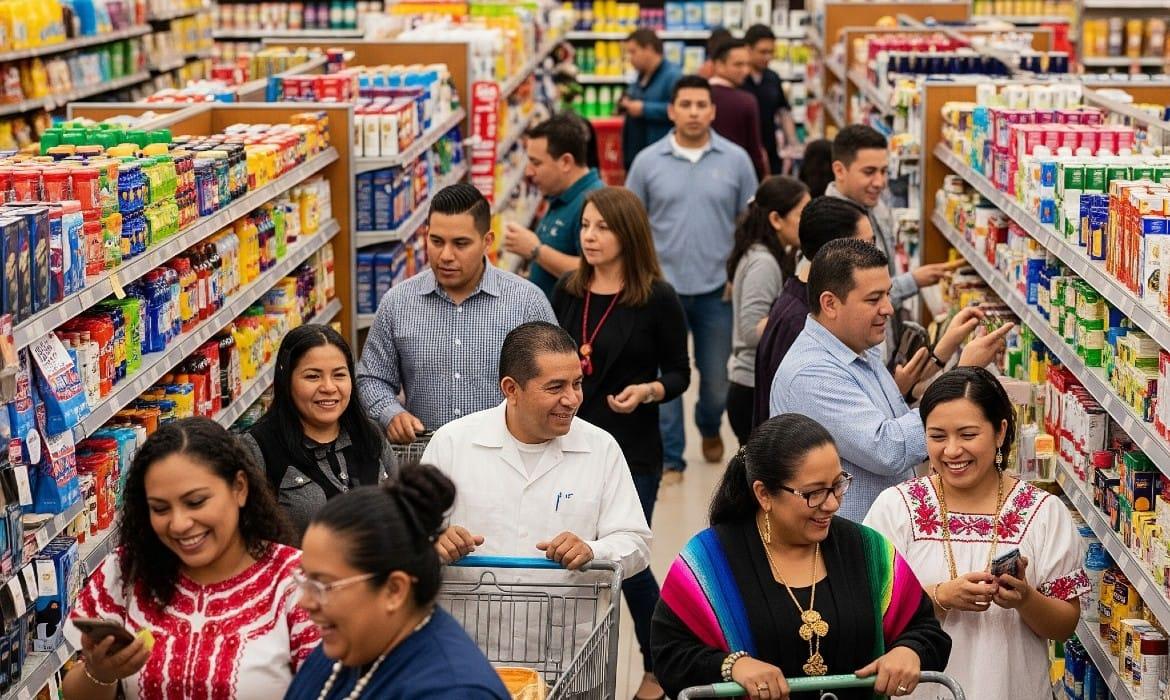
After a week visiting supermarkets, speaking with retailers, and observing different formats and business models, the Hispanic Retail Chamber of Commerce shares its initial insights into one of the most dynamic and sophisticated markets in U.S. retail.
Washington, D.C. — August 2026. After an intensive week visiting supermarkets and stores across different California markets, the Hispanic Retail Chamber of Commerce (HRCOC) is beginning to process the conversations held with executives, operators, store teams, and independent retailers, together with the observations gathered throughout the experience.
We would like to express our special appreciation to Northgate Markets, Gelson’s, Erewhon, Big Saver Foods, Superior Grocers, Chedraui USA, and all of the independent retailers who welcomed us and generously shared their time, experience, and perspective on the business.
This visit is part of HRCOC’s ongoing effort to gain first-hand insight into the evolution of the U.S. supermarket industry and to understand how operators are responding to the profound demographic, cultural, economic, and technological changes reshaping the industry.
California: A True Laboratory for U.S. Retail
California continues to be one of the most diverse, sophisticated, and competitive supermarket markets in the United States.
Few places in the country bring together premium formats, Hispanic-oriented supermarkets, value-focused operators, regional chains, large retailers, and independents with such intensity.
Each responds to different market realities, but they all face a common challenge:
understanding a rapidly changing consumer and turning that knowledge into a relevant retail proposition.
For Julio Ibanez, observing in-store operations leads to a particularly important conclusion:
“California makes one thing very clear: there is no single winning format. What wins is alignment — between the consumer, the value proposition, the economics of the business, and the ability to execute consistently.”
Ibanez emphasizes that format alone does not guarantee success.
“A premium supermarket can win through experience and differentiation; a value operator through price, assortment, and efficiency; a Hispanic-oriented retailer through cultural intelligence, authenticity, and community relevance; and an independent through proximity, flexibility, and deep local knowledge. The model changes. The discipline of understanding the customer does not.”
According to Ibanez, the difference comes down to consistency.
“The strongest operators show very little distance between what the brand promises and what the customer actually experiences. Assortment, pricing, fresh, merchandising, promotions, service, and execution all reinforce the same proposition. Strategy becomes credible only when the customer can see it in the store.”
That leads to our first clear conclusion:
There is no single winning format. There is a winning ability to understand the consumer and consistently execute on that understanding.
Multiculturalism Is No Longer a Category
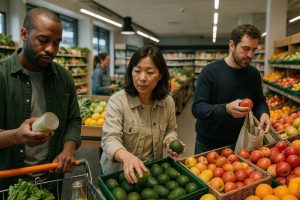
One of the most important observations from the trip is that consumer multiculturalism can no longer be understood as an isolated segment.
It is not simply about creating a “Hispanic aisle.”
Nor is it about adding a few international products to a traditional supermarket.
And certainly not about treating “Hispanic” as synonymous with multiculturalism.
The consumer has evolved, and the supermarket must evolve with them.
From Julio Ibanez´s perspective, this evolution has a direct impact on operations.
“Multicultural retail is no longer an assortment strategy or a designated aisle. It is becoming an operating capability. It affects fresh and prepared foods, categories, pricing and promotions, merchandising, communication, service, and the entire shopping experience.”
He adds:
“Consumers may have different cultural roots, but their baskets and expectations are increasingly multidimensional. Cultural relevance matters, but so do price, quality, convenience, freshness, service, and discovery. Retailers that reduce multicultural consumers to ethnicity alone risk misunderstanding how those consumers actually shop.”
This observation is particularly relevant in California.
The strongest operators do not necessarily talk about multiculturalism all the time.
They execute it.
It is reflected in the store, the assortment, the departments, the experience, and the way the retailer understands its community.
For HRCOC, this represents an important conceptual shift.
The Hispanic consumer should not be viewed solely as a segment to serve.
Hispanic consumers are also one of the forces helping redefine U.S. retail.
Operations Remain at the Heart of the Supermarket
In an environment where the industry is rapidly moving toward digitalization, Julio Ibanez believes the transformation of retail should not cause operators to lose sight of a fundamental principle:
“The supermarket still wins or loses on the sales floor.”
That statement summarizes a reality that could be observed repeatedly throughout the trip.
Strategy can be excellent, but it must become execution.
Assortment can be carefully defined, but it must be available.
A promotion can be perfectly designed, but it must be executed.
Technology can generate valuable information, but that information must reach the people making decisions.
And consumers may have clear expectations, but store teams must be able to respond to them.
“Walking the sales floor exposes the distance between strategy and reality very quickly. Availability, presentation, fresh departments, signage, cleanliness, service, and promotional execution are not small operational details; they are visible evidence of whether the strategy is actually working.”
Ibanez also points out that one of the major challenges facing retailers is maintaining that consistency.
“One excellent store proves very little. The real competitive advantage is the ability to reproduce the standard every day, across every location, without losing relevance to the local customer.”
Technology to Improve; People to Execute
California also confirms that technology is becoming a fundamental tool in the evolution of the supermarket.
Artificial intelligence, automation, data analytics, management systems, pricing tools, and new digital solutions can help retailers better understand consumers, optimize inventory, improve processes, and make better-informed decisions.
But technology does not replace operations.
It strengthens them.
And this is where HRCOC believes it is essential to distinguish between technology and transformation.
Technology can indicate what is happening.
Data can help explain why it is happening.
Intelligence can help anticipate what may happen next.
But human execution turns that information into results.
As Ibanez explains:
“Technology can improve the quality and speed of a decision, but it does not create the result by itself. The result is created when the organization converts intelligence into action. That is why adoption, accountability, and execution at store level matter as much as the technology itself.”
The consumer experience continues to happen in the store: through product quality and availability, shelf presentation, freshness, speed of service, effective promotional execution, and the ability of store teams to respond to the customer.
That can appear in a report.
But you can only truly understand it by walking the sales floor.
HRID: Information and Intelligence to Strengthen Decision-Making
From this perspective, during its California visit HRCOC presented its new vision for supporting retailers through HRID, designed to strengthen retailers’ ability to transform information and knowledge into better decisions.

The objective is not to adopt technology for technology’s sake.
It is to use technology to strengthen the process:
Information → Intelligence → Decision → Execution → Result
For Julio Ibanez, the challenge is making that information genuinely useful to the operation.
“The value of information is not having more dashboards or more data. It is reducing the distance between information and action. Retailers need to understand what is happening, why it is happening, what it means economically, and what decision should follow.”
From HRCOC’s perspective, HRID — Hispanic Retail Intelligence Database is designed to support that process.
A dashboard can display an indicator.
An algorithm can identify an opportunity.
An intelligence tool can recommend an action.
But ultimately:
a person inside the store is the one who makes that decision work.
That is why our vision combines:
Intelligence + Technology + Experience + Human Execution.
From the Sales Floor to the Business Ecosystem
For Daniel Esteban Novoa, Co-Founder & Executive Vice President of HRCOC, the California experience adds a second dimension to the way we understand the market.
“California leaves us with a lesson that goes beyond what happens inside each supermarket. We are looking at an evolving ecosystem where opportunities emerge when we are able to connect knowledge, retailers, suppliers, technology, and services around a common vision.”

Novoa believes the future of the supermarket will not be built by a single player.
“We are not simply looking to connect companies with retailers. We want to connect capabilities around the retailer in order to support better decisions and create new business opportunities.”
From this perspective, HRCOC seeks to build bridges among retailers, suppliers, technology companies, service providers, business associations, and international markets.
“The challenge is no longer simply selling to the retailer. It is understanding how the retailer’s ecosystem works, what it needs, which problems it is trying to solve, and which capabilities can help it grow.”
For Novoa, this vision also changes the way multiculturalism should be understood.
“The question is no longer simply how to serve the Hispanic consumer. The question is how to build a retail industry capable of understanding and serving an increasingly multicultural American consumer.”
He adds:
“The future of Hispanic retail is not necessarily about remaining separate from mainstream U.S. retail. It is about becoming one of the key forces driving its multicultural evolution.”
A New Generation of Opportunities
The California experience also reinforces HRCOC’s belief in the importance of creating new connections among the different players in the market.
Retailers, suppliers, technology companies, service providers, business associations, and international markets are forming an increasingly integrated ecosystem.
For Novoa:
“California demonstrates that when these capabilities are connected, the supermarket becomes more than a point of sale. It becomes a platform for opportunity.”
This vision is aligned with HRCOC’s evolution as an organization seeking to go beyond traditional institutional representation.
The Chamber seeks to generate knowledge, connections, services, business opportunities, and decision-making tools for retailers and companies connected to the ecosystem.
Two Complementary Perspectives for Understanding Retail
The California experience allowed HRCOC to confirm that understanding the future of the supermarket requires looking simultaneously at two dimensions.
Operations and commercial strategy, where knowledge of the store, the consumer, and execution are fundamental.
And the business ecosystem, where technology, information, suppliers, services, partnerships, and new opportunities can accelerate transformation.
Julio Ibanez:
“The future of the supermarket will still depend on two fundamentals: understanding the consumer better than the competition and executing that understanding consistently. Technology will radically improve how we identify opportunities, but it will not eliminate the need for excellent operations. It will make weak execution more visible — and strong execution more powerful.”
Daniel Esteban Novoa:
“The future will also depend on our ability to connect those capabilities. Information, technology, retailers, suppliers, and services need to work increasingly closely together. That is where we see a tremendous opportunity for HRCOC.”
What Comes Next
This first visit leaves us with many questions, but also many opportunities.
Over the coming weeks, the Hispanic Retail Chamber of Commerce will continue sharing observations on consumer trends, formats, categories, shopping experience, multiculturalism, innovation, technology, and business opportunities identified throughout our California journey.
California does not simply show where the supermarket industry is heading.
In many ways, it also provides a glimpse of where U.S. retail may be heading next.
For HRCOC, the most important lesson is that the future will be neither exclusively technological nor exclusively operational.
It will be a combination of both.
Technology to understand better.
Information to decide better.
Experience to interpret better.
People to execute better.
And connections to create new opportunities.
HRCOC will continue visiting stores, speaking with retailers, listening to the market, and building bridges among the different players within the ecosystem.
Because to truly understand the future of the supermarket, you first have to walk the sales floor.
And to help build that future, we must connect the people and capabilities that make it possible.
President HRCOC
Retail Operations & Market Perspective
Shaping the Future of Hispanic & Multicultural Retail.
Co-Founder & Executive Vice President, HRCOC
Connecting Retail. Empowering Business.
