




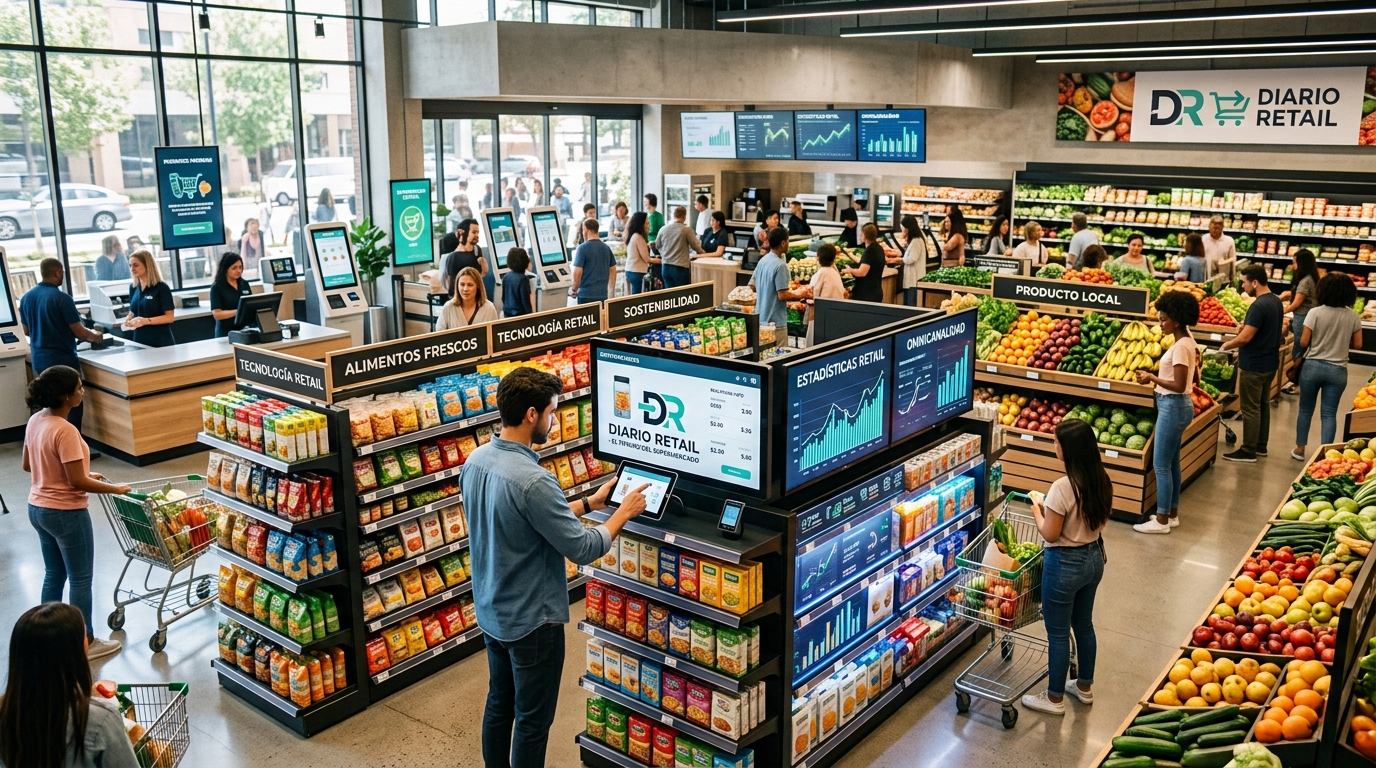
The retail group, parent company of Food Lion, Stop & Shop, Hannaford, and the Giant banners, implemented precautionary measures that impacted its digital platforms and online shopping services. Its brick-and-mortar stores remained open while the investigation was underway. The incident once again brings cybersecurity, operational continuity, and technological infrastructure protection in grocery retail to the forefront.
By Diario Retail | International | October 14, 2026
Ahold Delhaize Faces Cybersecurity Incident Affecting Digital Operations
International retail group Ahold Delhaize, one of the leading operators in the grocery sector, reported detecting a cybersecurity incident within its network and decided to temporarily disconnect select systems to safeguard its IT infrastructure and mitigate the risk of further disruptions.
The situation affected the websites and digital services of several of the group’s US banners, including Food Lion, Hannaford, Stop & Shop, Giant Food, and The Giant Company. Disruptions also impacted European brand platforms, such as Albert Heijn and Delhaize.
As a result, customers experienced service outages across digital channels, including online grocery shopping and order delivery services across affected operations.
The company clarified that its physical supermarket locations remained open and that its teams were working to investigate the incident, mitigate its impact, and restore systems in a controlled manner.
In its October 13 update, Ahold Delhaize stated that, up to that point, there was no evidence that customer or employee data had been compromised or stolen. The investigation remained ongoing, and the company had not released an official root cause for the incident.
Which Supermarket Chains Were Impacted
The disruption reached various group banners on both sides of the Atlantic.
In the United States, affected chains included:
-
Food Lion: Supermarkets with a significant footprint across the Southeast and Mid-Atlantic regions.
-
Stop & Shop: Major supermarket operator in the Northeast.
-
Hannaford: Banner operating across New England and other Northeastern markets.
-
Giant Food & The Giant Company: Operators serving multiple markets along the US East Coast.
In Europe, outages also affected digital services for brands like Albert Heijn, Delhaize, and other group-affiliated companies.
The extent of the impact varied by banner and market; therefore, it should not be assumed that all systems, physical stores, or services for each chain were entirely offline.
Supermarkets and Cybersecurity: Why the Impact Goes Beyond a Website Outage
This event demonstrates that digital infrastructure has become a mission-critical component of supermarket operations.
Today, grocery retail management relies on an interconnected technology ecosystem joining customers, suppliers, IT infrastructure, e-commerce platforms, loyalty programs, inventory systems, and commercial workflows.
When a vulnerability or incident occurs within any node of this infrastructure, the consequences often cascade well beyond the digital customer experience.
Key technological risks for retail include:
-
E-Commerce & Digital Sales Outages: Website or mobile app downtime prevents order intake, disrupts fulfillment/deliveries, and leads to immediate revenue loss.
-
Loyalty Program Friction: Outages across app platforms and personalized offer systems restrict customer access to rewards, discounts, and digital coupons.
-
Loss of Operational Continuity: Heavy reliance on IT ecosystems requires grocery retailers to maintain fallback offline protocols to preserve core business functions when platforms go dark.
-
Data Security & Privacy Risks: Safeguarding consumer, employee, vendor, and business partner data remains foundational to corporate trust and compliance.
-
Reputational Impact: The speed, transparency, and clarity of crisis communications directly shape consumer perception regarding safety and reliability.
It is important to distinguish between a preventative shutdown, a confirmed intrusion, and a data breach. These are distinct scenarios requiring tailored assessments. In Ahold Delhaize’s case, ongoing forensic investigation aims to establish the full scope and root cause of the incident.
Insights from Daniel Esteban Novoa, Executive Vice President of HRCOC
 For Daniel Esteban Novoa, co-founder and Executive Vice President of The Hispanic Retail Chamber of Commerce (HRCOC), events like this serve as an urgent warning for the entire US grocery industry.
Statement by Daniel Esteban Novoa:
“What is unfolding demonstrates that digital transformation in grocery retail isn’t just about adopting tech to drive sales or enhance customer experience. It also demands building resilient operations capable of incident response, data protection, and business continuity.
In grocery retail, technology is now core critical infrastructure. Cybersecurity must be treated as an executive-level strategic decision—not just an IT department task.
Supermarket operators must conduct comprehensive risk assessments, understand dependencies between platforms and third-party vendors, and maintain clear incident response protocols to act swiftly during an outage.
This challenge isn’t isolated to national chains. Independent and regional grocers must also strengthen their digital defense posture, scaled appropriately to their resources and threat exposure.
The goal isn’t merely preventing incidents—it’s ensuring business continuity, preserving shopper trust, and protecting relationships with suppliers and commercial partners.”
From HRCOC’s perspective, the objective is driving a more prepared, competitive grocery sector capable of leveraging digital innovation without compromising cyber resilience or operational uptime.

5 Priorities to Strengthen Supermarket IT & Cyber Resilience
Lessons from global enterprise operators provide actionable insights for grocery retailers of all sizes:
-
Conduct End-to-End Digital Infrastructure Risk Audits: Evaluate not only internal systems, but also third-party software vendors, external platforms, and API integrations.
-
Develop Robust Business Continuity Plans (BCP): Outline essential processes that must remain functional during an outage, identify manual workarounds, and assign clear trigger leads for contingency protocols.
-
Enforce Strict Access Controls & Data Protection: Implement Identity & Access Management (IAM), Multi-Factor Authentication (MFA), regular patching, offline backups, and employee security awareness training.
-
Establish a Coordinated Incident Response Framework: Align IT, operations, executive management, legal, PR, and customer support on clear protocols for stakeholder and public communication.
-
Regularly Test and Simulate Recovery Capabilities: Validate preparedness through penetration testing, table-top exercises, and failover simulations rather than relying on static documentation.
While these measures do not eliminate risk entirely, they significantly enhance threat prevention, response velocity, and operational recovery.
Operational Resilience as a Competitive Advantage in Retail
The expansion of online grocery, commercial workflow automation, Artificial Intelligence, and advanced data analytics continues to redefine store management and customer engagement.
However, as tech dependence grows, so does the imperative to manage the surface risks that accompany this evolution.
Modern grocery competitiveness will depend not only on sales conversion, inventory optimization, and customer insights, but equally on operational resilience—the capacity to maintain uptime and recover swiftly when unexpected disruptions occur.
For enterprise chains, this requires maturing risk management frameworks. For independent and regional supermarkets, it means adopting accessible security solutions, clear operating procedures, and closer coordination with tech vendors.
The Ahold Delhaize incident leaves a clear takeaway for the industry: grocery digital transformation must advance hand-in-hand with cybersecurity, operational resilience, and consumer trust protection.

Diario Retail will continue to track developments in this case and the broader technological trends reshaping the US and global supermarket industry.
Reference Source: Ahold Delhaize Corporate Update, October 13, 2026.
Diario Retail — Beyond News: Strategic Leadership for the Grocery Industry.
