




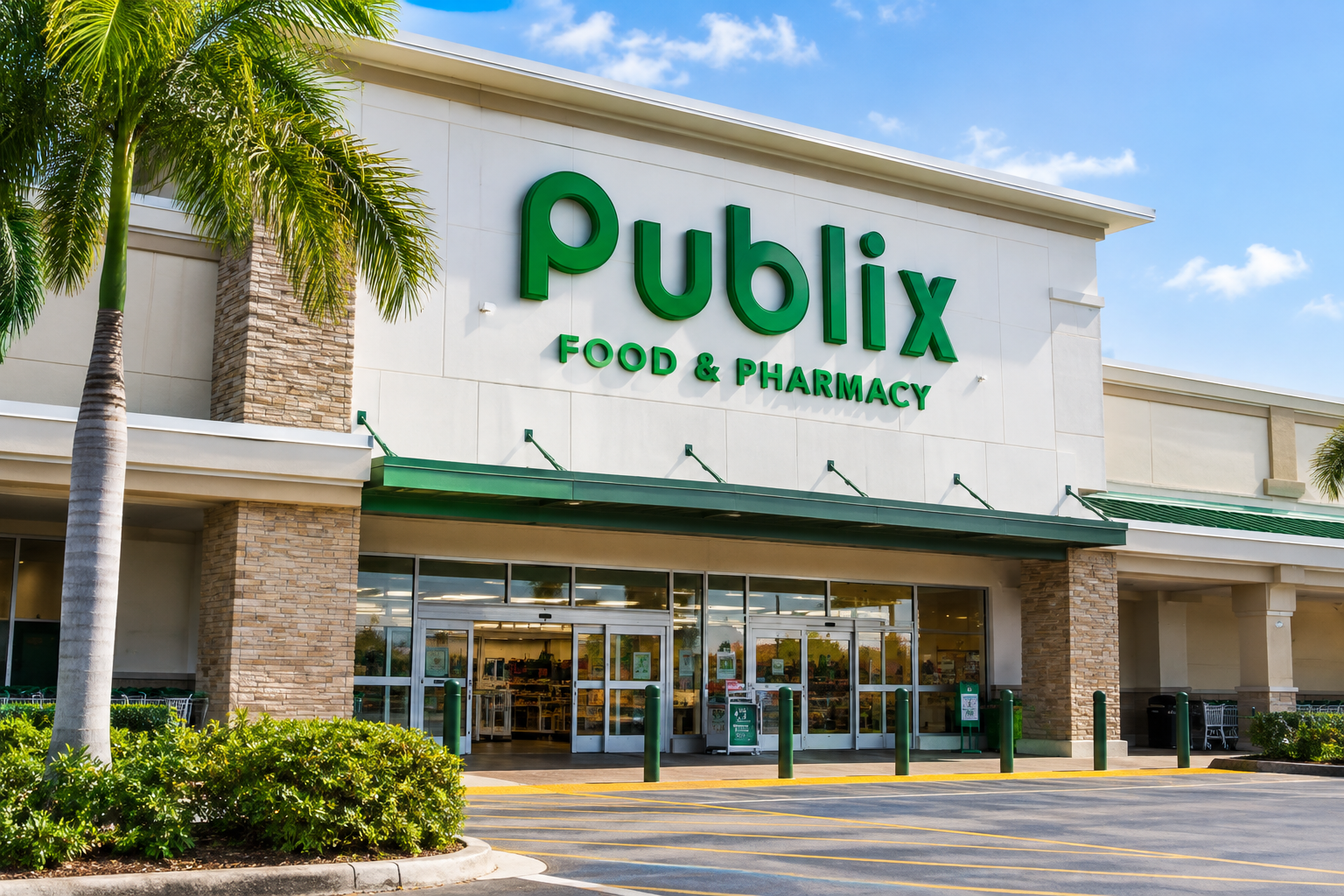
Publix to Close Seven Supermarkets in the U.S. Amid More Cautious Consumer Spending
The supermarket chain plans to close four locations in Florida, two in Georgia and one in South Carolina before the end of 2026. The decision comes as total sales continue to grow, while comparable-store sales decline.
Diario Retail | Retail News
Publix, one of the leading supermarket operators in the United States, plans to close seven locations before the end of 2026. The move will affect stores in Florida, Georgia and South Carolina, amid more cautious consumer spending and changing shopping habits.
Four locations in Florida, two in Georgia and one in South Carolina are included in the closures. Some locations may be rebuilt, making it important to distinguish between closing an existing store and permanently exiting a local market.
Seven Locations Affected by the Closures
The supermarkets involved are located in the following communities:
-
Florida: St. Petersburg, Miami, West Palm Beach and Palm Bay.
-
Georgia: Atlanta and Chamblee.
-
South Carolina: Goose Creek.
The closures come as Publix continues to generate overall sales growth, although its performance indicators point to more moderate results at established stores.
Sales Continue to Grow, but Comparable-Store Performance Weakens
-
During the second quarter of 2026, Publix reported sales of $15.7 billion, a 1% increase compared with the same period a year earlier.
-
For the first six months of the year, sales reached $31.9 billion, up from $31.4 billion during the first half of 2025, representing 1.5% growth.
-
However, comparable-store sales—a key metric used to measure performance at locations that were already operating during the previous year—declined 0.5% in the second quarter and 0.3% during the first half of 2026.
-
The company cited changes related to Medicare drug prices and lower consumer spending as factors affecting performance.

Daniel Esteban Novoa
Executive Vice President & Co-Founder, The Hispanic Retail Chamber of Commerce (HRCOC)
“Store closures should not be viewed in isolation. In today’s grocery market, success depends on understanding local consumer behavior, adapting to changing spending patterns, and continuously evaluating each store’s performance. The real strategic challenge is not simply deciding where to close, but knowing where to invest, how to evolve, and how to create sustainable growth.”
Store-Level Performance Remains a Strategic Priority
Publix’s results highlight one of the supermarket industry’s central challenges: sustaining overall business growth while evaluating the performance of individual stores.
In a competitive market, consolidated sales figures do not always tell the full story of what is happening at each location. Local demand, sales trends, operating costs and the commercial potential of individual stores all play a role in determining whether a location should remain open, be remodeled or be replaced by a new format.
For manufacturers, distributors and suppliers seeking to build business relationships with U.S. supermarket chains, understanding these developments is equally important. Retailers’ expansion, investment and restructuring decisions can influence commercial opportunities and market-entry strategies.
The announced closures do not necessarily signal an overall contraction at Publix. The company continues to report positive total sales growth, although at a moderate pace and alongside weaker comparable-store performance.
The takeaway for the industry is clear: In the supermarket business, revenue growth alone is not enough. Maintaining store-level performance and adapting the store network to changing market conditions remain strategic priorities.
Diario Retail | News and analysis for the supermarket and retail industries.
