




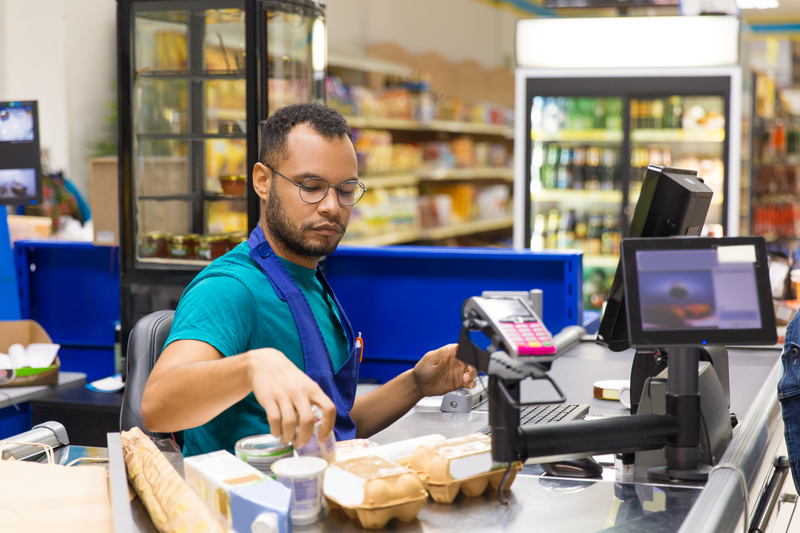
With a turnover rate exceeding 70% at cash registers and an influx of migrants that has reduced the available workforce, Hispanic supermarkets and businesses are facing one of their most challenging years.
Technology is beginning to change the way they hire.It’s seven o’clock on a Saturday morning, and the manager of a Hispanic supermarket already knows it’s going to be a long day.
Two cashiers didn’t show up, the butcher shop has been operating with one less person for three weeks, and the delivery truck is waiting to be unloaded. The scene is repeated, with different names, in stores across the country.I
t’s not a lack of customers. It’s a lack of people to serve them.
A problem that starts at the cash register
Retail has always dealt with staff turnover, but in the food sector the phenomenon is particularly acute. According to an analysis by Coca-Cola Retailing According to the Research Council, employee turnover in the grocery sector reaches 69% annually, well above the average for other industries. And within the store, the position with the highest turnover is that of cashier, at 78%.
In practice, this means that a supermarket with 20 cashiers may be forced to replace almost 16 of them in a single year. As each vacancy is filled, lines grow longer, customers become impatient, and the rest of the team is burdened with extra shifts, fueling exhaustion and further resignations.
The migratory environment: the hardest hit is the Hispanic community
Adding to this reality is a factor that has marked recent months: the tightening of immigration policy. Workplace enforcement operations, the termination of temporary permits like TPS for several nationalities, and a climate of fear in many communities have reduced the available workforce in the sectors that depend most on it.
Retail employers said that immigration policy would have a significant or moderate impact on their workplaces over the next twelve months, compared to 70% of all employers.
Retail workforce is concentrated : cashiers, bakers, butchers, stockers, and warehouse staff. When that talent dwindles, or when employees stop showing up for work out of fear, the effect is immediately noticeable in the store.

The cost that does not appear on the income statement
Many business owners underestimate the true cost of losing an employee. Human resources specialists estimate that replacing a worker costs between 30% and 150% of their annual salary, when you factor in recruitment, training, overtime for the rest of the team, mistakes made in the first few days, and lost productivity while the position is vacant.
Technology is entering the store, also for hiring.
Faced with this situation, the sector is beginning to change the way it recruits staff. Posting a notice on the store door and waiting is no longer enough. Human resources firms specializing in retail are adopting artificial intelligence platforms that connect with more than 70 job portals simultaneously and filter profiles according to the specific requirements of each position.
Instead of waiting for candidates to apply, these systems actively seek out people who already meet the store’s experience, availability, and location requirements. As a result, a vacancy that previously took weeks to fill can now be filled within 24 to 72 hours.
These tools cover virtually every department in a supermarket: cashiers, store managers and directors, management assistants, administrative staff, bakery, butcher shop, grocery and restocking, fruits and vegetables, deli, warehouse and receiving, maintenance, drivers and customer service.

Hire quickly, but also hire well.
Speed, however, isn’t everything. The companies best positioned to navigate the crisis are those that, in addition to hiring quickly, ensure each person arrives prepared. This includes a thorough legal process, with up-to-date document verification and Workers’ Compensation policies , and prior certification in industrial safety based on OSHA standards.
A worker who knows how to use personal protective equipment, emergency plans, safe load handling, slip and fall prevention, and the workplace harassment policy adapts faster, gets injured less often, and is more likely to stay. In an industry where much of the turnover occurs in the first few weeks, that preparedness makes all the difference.
A sign of hope for the sector
The crisis also presents an opportunity: to professionalize how Hispanic retailers hire, train, and retain their employees. Hiring legally, with verified and safety-trained staff, protects the business and offers community workers dignified, stable employment with clear terms and conditions.
The Hispanic community has built a significant portion of this country’s commerce, one register at a time and one store at a time. This is a difficult time, but the tools to address it are already in place. For business owners who are currently worried about their reduced hours, the message is clear: the staffing shortage is real, but it is no longer an insurmountable problem.

Marcela Primo
CEO · LEEM PRO Staffing
marcela@leempro.com
LEEM PRO Staffing has been recognized by the White House, the United States Senate, and the Florida Senate for its support of the Hispanic community, and holds The Hispanic Designation Certificate Retail Chamber of Commerce as a staffing company specializing in payroll and human resources for the retail sector .
