

Close Menu

    Subscribe to Updates

    Get the latest creative news from FooBar about art, design and business.

    What's Hot

    Fresh Produce Shopping Fragments, Forcing Supermarkets to Rethink Strategy

    diciembre 23, 2025

    The Silent Supermarket Revolution of 2025: AI and Digital Labels Take Center Stage

    diciembre 22, 2025

    Retail Warning: California’s Total Plastic Bag Ban Arrives January 2026, Bringing $5,000 Daily Fines

    diciembre 15, 2025
    Facebook X (Twitter) Instagram
    • Business Directory
    • Contact
    Facebook X (Twitter) Instagram YouTube
    Diario RetailDiario Retail
    Demo
    • Home
    • Categories
    • Supermarkets
    • Business Directory
    • Purchasing Center
    • LATAM
    • Contact
    Diario RetailDiario Retail
    Home»Innovation»The Silent Supermarket Revolution of 2025: AI and Digital Labels Take Center Stage
    Innovation

    The Silent Supermarket Revolution of 2025: AI and Digital Labels Take Center Stage

    Nelson PereiraNelson Pereiradiciembre 22, 20256 Views
    Facebook Twitter Pinterest LinkedIn Telegram Tumblr Email
    Share
    Facebook Twitter LinkedIn Pinterest Email Telegram WhatsApp

    The physical retail landscape at the close of 2025 has ceased to be a separate entity from the digital world, becoming a high-frequency data environment. The industry has reached a point of no return where the traditional «analog» store is seen as an operational disadvantage compared to the new global infrastructures led by Artificial Intelligence (AI) and Electronic Shelf Labels (ESL).

    The Boom of Electronic Shelf Labels (ESL)

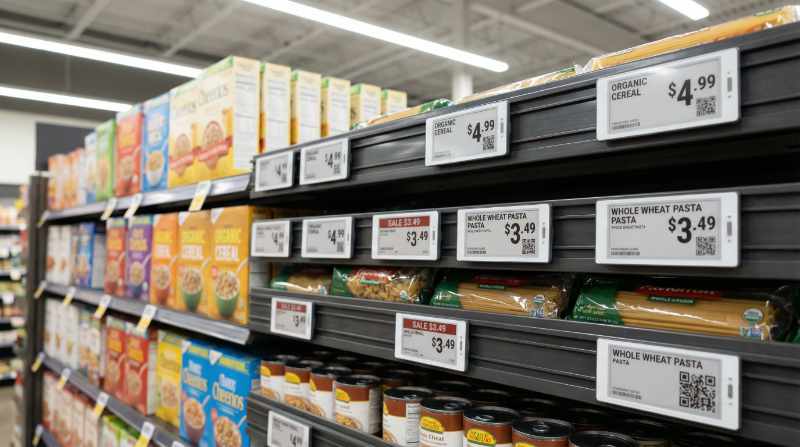
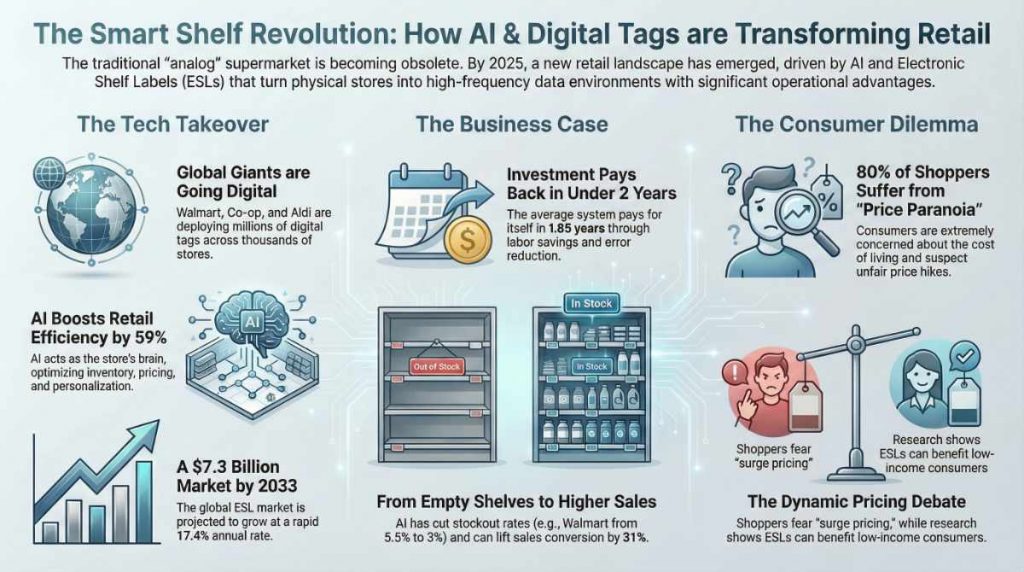
    The mass adoption of digital labels is perhaps the most visible change. Walmart, the sector giant, has led this transition with plans to equip 2,300 stores in the United States by 2026, representing a demand for 400 to 500 million ESL units. In the United Kingdom, Co-op has partnered with VusionGroup to implement these labels in nearly 2,400 locations, marking the largest rollout in the region. Meanwhile, Aldi Süd has reached the milestone of equipping more than 7,500 stores with 25 million devices globally.

    The global ESL market reached a value of $2.09 billion by mid-2025, with projections pointing to $7.32 billion by 2033, growing at a compound annual growth rate (CAGR) of 17.4%. This technology not only allows for real-time price updates but also facilitates inventory management and online order picking through integrated LED lights that guide employees to the correct product.

    Artificial Intelligence: The Brain of the Operation

    AI has evolved from a novelty to the central operating system of the modern store. It is estimated that by 2025, AI will improve retail efficiency by 59%.

    1. Inventory and Stock Management: By analyzing historical data, weather, and social media trends, AI enables demand forecasting with unprecedented accuracy. Walmart, for example, has reduced its stockout rates from 5.5% to 3% thanks to these systems.
    2. Personalization: Tools like Sephora’s «Smart Skin Scan» or Home Depot’s «Magic Apron» assistant demonstrate how generative AI can increase sales conversion by an average of 31% by offering hyper-personalized recommendations.
    3. Dynamic Pricing: Algorithms adjust costs based on demand and inventory levels. This allows, for instance, automatic discounts on perishable products near their expiration date, reducing food waste.

    The Consumer Dilemma: «Price Paranoia»

    Despite the operational benefits, the implementation of these technologies has generated what analysts call «price paranoia». A Gartner survey indicates that 80% of consumers are extremely concerned about the cost of living, and 59% suspect that brands are unnecessarily raising prices to pad profits.

    The main concern lies in «surge pricing,» where costs could rise instantly during demand peaks. In response, U.S. lawmakers like Elizabeth Warren have called for greater transparency. However, research from the University of Texas suggests there is no evidence of unjustified hikes and that, in fact, ESLs benefit low-income consumers by allowing rapid markdowns on fresh products.

    A Strong Return on Investment (ROI)

    The financial justification for these investments is clear. A mid-sized store managing 10,000 paper tags spends about 50 hours a week on manual changes, costing approximately $39,000 annually in labor. By implementing an ESL system, labor savings, the elimination of labeling errors, and energy efficiency allow the system to pay for itself in approximately 1.85 years.
    Conclusion

    The future of the supermarket in 2026 is moving toward «ambient intelligence.» The integration of second-generation (2D) QR codes and in-store digital media networks will transform shelves into dynamic communication points. Those retailers who manage to balance technological efficiency with consumer transparency will be the ones to dominate the market in the coming decade

    Share. Facebook Twitter Pinterest LinkedIn Tumblr Email
    Nelson Pereira

    Related Posts

    THE DEFINITIVE FUSION: HOW CHATGPT AND INSTACART ARE REDEFINING THE FUTURE OF GROCERY RETAIL

    diciembre 9, 2025

    ADSMOVIL Joins as Main Partner at the Inaugural Grand Retail Show 2025 in Dulles, VA

    junio 11, 2025

    INTERMEX Joins The Hispanic Retail Chamber and Strengthens Its Presence in the Retail Sector at the Grand Retail Show

    junio 5, 2025

    Tecnológico de Monterrey Joins Grand Retail Show 2025 in Dulles, Virginia

    junio 4, 2025

    Target Foot Traffic Decreases for Eighth Week Following DEI Boycott

    abril 9, 2025

    This is how Aldi boosted a food giant

    marzo 26, 2025
    Leave A Reply Cancel Reply

    Top Posts

    Save Mart tiene nuevo dueño

    abril 2, 20221.462 Views

    Primark continues its expansion in the United States

    marzo 28, 20251.142 Views

    Ranking: The Best Airline in Latin America in 2023

    septiembre 30, 20241.125 Views
    Don't Miss

    Fresh Produce Shopping Fragments, Forcing Supermarkets to Rethink Strategy

    diciembre 23, 2025By Nelson Pereira

    The way consumers shop for fresh produce is changing, making merchandising in the grocery retail…

    The Silent Supermarket Revolution of 2025: AI and Digital Labels Take Center Stage

    diciembre 22, 2025

    Retail Warning: California’s Total Plastic Bag Ban Arrives January 2026, Bringing $5,000 Daily Fines

    diciembre 15, 2025

    THE DEFINITIVE FUSION: HOW CHATGPT AND INSTACART ARE REDEFINING THE FUTURE OF GROCERY RETAIL

    diciembre 9, 2025
    Stay In Touch
    • Facebook
    • Twitter
    • LinkedIn
    Latest Reviews
    Most Popular

    Save Mart tiene nuevo dueño

    abril 2, 20221.462 Views

    Primark continues its expansion in the United States

    marzo 28, 20251.142 Views

    Ranking: The Best Airline in Latin America in 2023

    septiembre 30, 20241.125 Views
    Our Picks

    Fresh Produce Shopping Fragments, Forcing Supermarkets to Rethink Strategy

    diciembre 23, 2025

    The Silent Supermarket Revolution of 2025: AI and Digital Labels Take Center Stage

    diciembre 22, 2025

    Retail Warning: California’s Total Plastic Bag Ban Arrives January 2026, Bringing $5,000 Daily Fines

    diciembre 15, 2025

    Subscribe to Updates

    Get the latest creative news from FooBar about art, design and business.

    Diario Retail
    Facebook X (Twitter) Instagram YouTube LinkedIn
    • Home
    • Categories
    • Business Directory
    • LATAM
    © 2025 Diario Retail

    Type above and press Enter to search. Press Esc to cancel.