




The year 2026 presents an economic and commercial landscape defined by complex technological convergence and sharp structural divergence across regions. While the global economy is experiencing moderate but inherently fragile growth , the retail sector and Hispanic markets are facing drastic transformations. From the reconfiguration of consumer habits through Artificial Intelligence (AI) to barriers in accessing capital, the business environment demands immediate strategic adaptation.
Consumer Rejection of Extreme Automation: The Self-Checkout Dilemma
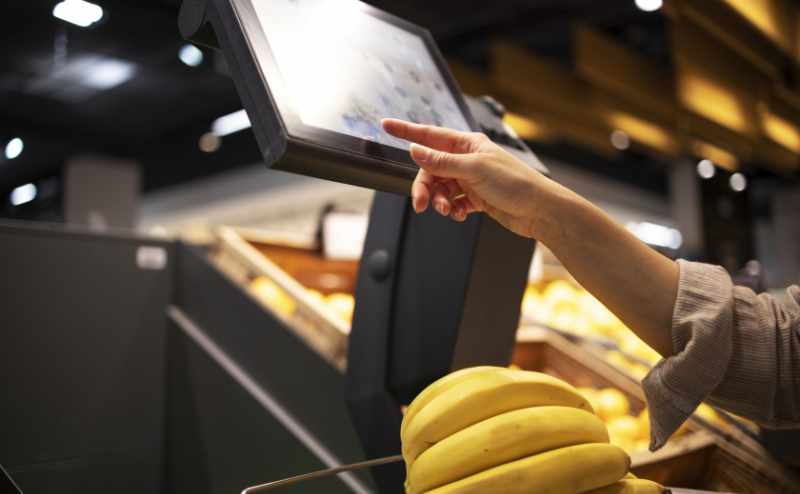
One of the most revealing trends in the supermarket industry is the pushback against the implementation of self-checkout lanes. Although they arrived with the promise of speeding up transactions and reducing wait times, today they have become a source of frustration for millions of consumers. According to recent AI-driven analyses, technical friction—such as the dreaded “Unexpected item in the bagging area” message—is one of the biggest stress generators.
Shoppers perceive that they are performing a cashier’s job without receiving any benefits in return, such as direct product discounts. Furthermore, the process becomes particularly tedious when trying to ring up fresh produce or bakery items, where human efficiency still vastly outperforms digital menus. In an ecosystem where loyalty is key, the coldness of the automated process eliminates polite and human interaction, a component of the shopping experience that no touchscreen has managed to replicate.

Digital Marketing in 2026: The Mandatory Transition from SEO to GEO
In the digital realm, search behavior has abandoned the transactional keyword-based model to adopt a process of “conversational discovery”. Retail companies are no longer just optimizing for traditional search engines (SEO), but are applying Generative Engine Optimization (GEO).
In Hispanic markets, consumers demand direct, high-quality answers. Successful brands in 2026 are those that manage to position themselves as “citation authorities” within generative AI ecosystems. Transparency in the use of first-party data and building trust are the main competitive differentiators. Likewise, marketing strategies are appealing to the “economy of nostalgia,” reinterpreting cultural symbols from past decades to emotionally connect younger generations with mature consumers, increasing brand sympathy by up to 20%
Economic Outlook: Stagnation or Opportunity for Latin America?
On a macroeconomic level, Latin America enters 2026 with limited growth, estimated between 2.1% and 2.3% of regional GDP. This lag compared to other emerging markets responds to chronic structural problems: low investment, moderate private demand, and insecurity.
However, the global scenario is driving new opportunities. The transition to sustainable and digital economies has skyrocketed the demand for critical minerals. With the “lithium triangle” housing more than half of the world’s known reserves and a dominant share in copper production, the region has undeniable potential. At the same time, the nearshoring phenomenon is reconfiguring supply chains. In Mexico, this has unleashed intense real estate and industrial demand, driving decentralization toward secondary cities like Querétaro and Mérida, where the development of vertical housing and “loftization” are setting the trend.
In contrast, the US market is experiencing a stabilized inflation scenario, with a Consumer Price Index (CPI) of 3.3% year-over-year as of March 2026 , while rents have fallen 6.2% from their peak, hitting their lowest level in four years.

The Hispanic Entrepreneur in the U.S.: An Economic Engine Facing Capital Barriers
A crucial sector of the US economy is the Hispanic business community. These businesses generate approximately $800 billion annually and employ over 3.5 million people; however, they represent only 6.9% of all businesses in the country.
The primary obstacle to their expansion in 2026 remains access to capital. This is where institutions, such as chambers of commerce, become fundamental pillars to bridge this gap, connecting Latino owners with professional networks, investors, and banks. Promoting the integration of Hispanic businesses into formal financial structures is vital to scale their contribution to the global GDP.
Conclusion
The 2026 market demands a high degree of strategic “optionality”. Commercial success will favor companies and retail chains that manage to balance the efficiency of new technologies, such as AI, with the indispensable warmth of human interaction and the resolution of infrastructure barriers. Today, the brand that is easiest to “understand and verify” will have the ultimate advantage in this new era of conversational commerce.
*** Editor’s Note: Thi document has been compiled from international economic projections, consumer behavior surveys, and financial reports from the first quarter of 2026.
