




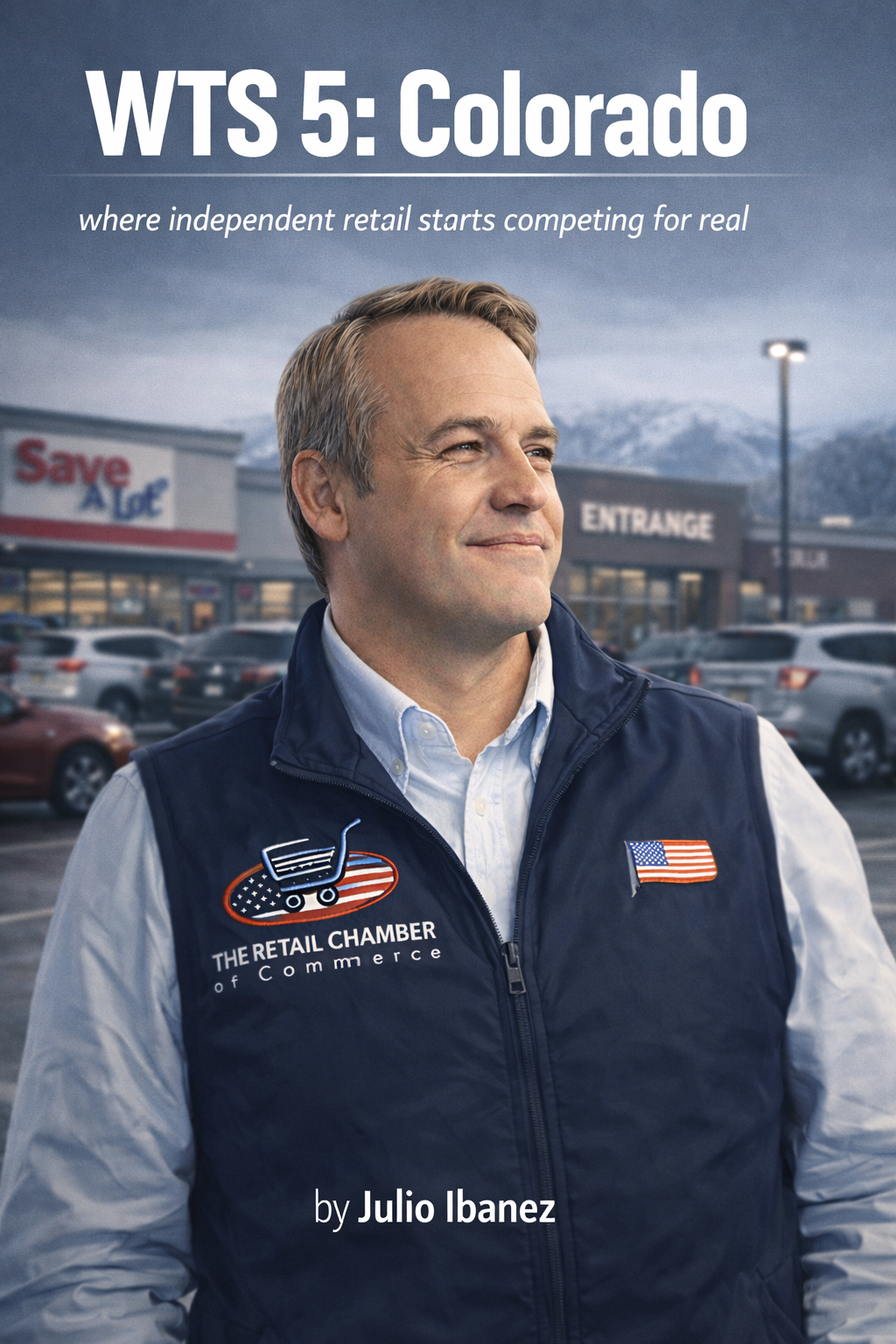
My time in Colorado was not by chance. Being part of the National Retailer Advisory Board (NRAB) of IGA gave me access to where independent retail is truly evaluated—and where the decisions shaping the next phase of the industry are being made.
We spent a full day with the executive team of Leevers Supermarkets visiting their different store formats across Colorado. And it reinforced something many operators still don’t want to accept:
The future of independent retail is not about choosing one format.
It’s about mastering multiple formats with surgical precision.
But there is something deeper the industry is still not fully accepting:
This is not about deciding whether to be multicultural.
That decision has already been made by your customer.
The real question is whether your store is structured to remain relevant to the customer you already have.

Save A Lot: hard discount that doesn’t ask for permission
Save A Lot is not trying to look good. It’s trying to win.
- Limited, highly optimized assortment
- Absolute dominance of private label
- Simple operations → consistent execution
- Clearly defined customer: extreme price sensitivity
There’s no storytelling here. It’s math.
Many independent retailers claim to compete on price… but operate like premium stores.
Save A Lot doesn’t have that problem.
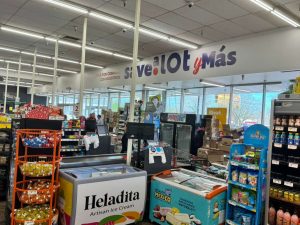
Save A Lot y Más: intelligent adaptation, not cosmetic
Save A Lot y Más is not about “adding Hispanic products into a discount store.” It’s something much more disciplined:
- Real assortment adaptation (not decorative)
- Cultural relevance, especially in fresh departments
- Direct communication with the Hispanic customer
- Full cost discipline from the original model
Most operators fail here because they mix identity with improvisation.
Leevers proves you can adapt without breaking the model.
Ahorra Mucho: when you understand the customer—and execute
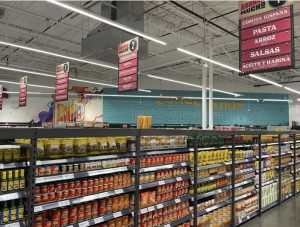
Ahorra Mucho operates in a different space.
This is no longer pure hard discount. This is volume + cultural connection.
- Fresh as the core (produce, meat, prepared foods)
- High velocity driven by real Hispanic shopping habits
- Emotional + functional assortment
- A more dynamic, closer shopping experience
This is where most retailers fail.
This is not a format problem. It’s a merchandising and execution problem.
Stores that struggle are not lacking customers—
they are lacking alignment between assortment, in-store execution, and how their customers actually shop.
This model does not forgive.
Without volume, discipline, and operational control, it quickly turns into shrink, waste, and chaos.
Leevers doesn’t just understand it. They execute it.
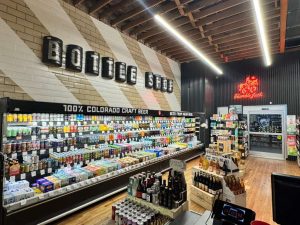
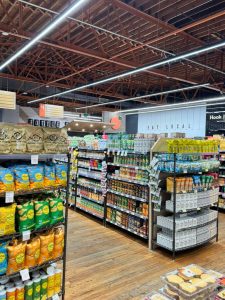
Leevers Locavore: the other end of the spectrum
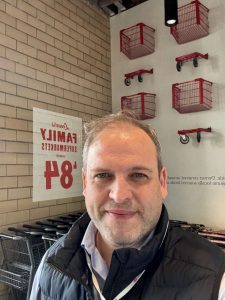
Leevers Locavore looks like a completely different business—but it isn’t.
It’s the same company operating in a different league:
- Local products as the core differentiator
- Elevated shopping experience
- Margin driven by perceived value
- Different customer, different ticket
This breaks another comfortable assumption:
You don’t have one customer.
You have multiple—and if you don’t manage them properly, you lose them.
And today, that customer is already hybrid.
Mainstream and multicultural products coexist in the same basket.
Customers move across categories based on familiarity, price, and availability—not labels.
One company, four formats, one clear thesis
Leevers is not experimenting. It is executing:
- Extreme discount → Save A Lot
- Multicultural discount → Save A Lot y Más
- Hispanic supermarket → Ahorra Mucho
- Premium/local → Leevers Locavore
Four formats.
Four customers.
One organization.
The future of multicultural retail formats
The problem is not the market. It’s the lack of focus.
Operating today in a hybrid model where you are:
- Not the cheapest
- Not the most culturally relevant
- Not the most compelling in experience
is not strategy. It’s inertia.
And in retail, inertia costs margin…
until it costs the store.
This is not about redefining your identity as a retailer.
It’s about aligning your store with the reality of who is already walking through your doors.
If you want to compete in the coming years:
- Define which format you are playing—and which ones you are not
- Separate operations with no compromises
- Use private label as a real competitive advantage
- Execute fresh at an excellent level—or get out of the category
- Decide where you win: price, culture, or experience
But don’t try to win at everything…
because that’s how you end up losing at all of it.
