




The transaction marks Kroger’s first major strategic move since its proposed merger with Albertsons was blocked. The acquisition significantly strengthens the company’s presence across the Midwest and Mid-Atlantic, as competition intensifies from Walmart, Costco, Amazon, and value-oriented grocery formats.
Diario Retail | Mergers & Acquisitions | United States
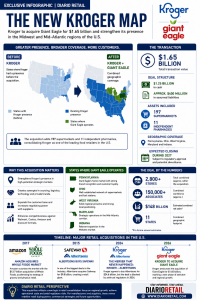
The U.S. grocery industry is once again at the center of one of the year’s most significant transactions. Kroger has entered into a definitive agreement to acquire Giant Eagle, one of the nation’s leading regional supermarket operators, in a transaction valued at approximately $1.65 billion, including cash consideration and the assumption of certain liabilities.
Subject to regulatory approval, the acquisition represents Kroger’s first major inorganic growth initiative since its proposed merger with Albertsons was blocked by federal antitrust regulators in 2024.
Through the transaction, Kroger will add approximately 200 supermarkets and 11 standalone pharmacies, significantly expanding its footprint across Pennsylvania, Ohio, West Virginia, Maryland, and Indiana—markets where Giant Eagle has built a strong competitive position and enjoys exceptional customer loyalty.
A Different Growth Strategy After Albertsons
Rather than pursuing another nationwide mega-merger, Kroger has chosen a targeted regional acquisition with lower regulatory risk and strong geographic complementarity.
The move reflects a broader strategic shift toward selective acquisitions that strengthen key regional markets, improve operating efficiencies, and enhance Kroger’s ability to compete against industry leaders such as Walmart, Costco, Amazon, and rapidly expanding discount retailers.
According to Kroger, Giant Eagle brings several highly complementary assets, including a trusted regional brand, strong fresh food operations, pharmacy services, successful private-label programs, and a well-established customer loyalty platform.
Transaction Highlights
Transaction Value
$1.65 Billion
Deal Structure
- $1.25 billion in cash
- Approximately $400 million in assumed liabilities
Assets Included
- 197 supermarkets
- 11 standalone pharmacies
Geographic Expansion
- Pennsylvania
- Ohio
- West Virginia
- Maryland
- Indiana
Expected Closing
The transaction is expected to close during 2027, subject to regulatory approval and any required divestitures to satisfy antitrust requirements.
More Than an Acquisition
The announcement sends a broader message to the grocery industry.
While Walmart continues expanding its dominance in food retail, Costco maintains strong membership-driven growth, and Amazon accelerates its digital grocery strategy, traditional supermarket operators are pursuing new ways to achieve scale without triggering the regulatory challenges associated with large national mergers.
The Giant Eagle acquisition enables Kroger to deepen its presence in markets where it already has operational expertise, leverage purchasing and distribution synergies, and strengthen its negotiating position with suppliers.
Implications for Manufacturers and Suppliers
For the consumer packaged goods industry, the transaction is expected to have meaningful commercial implications.
Kroger’s increased purchasing scale could reshape category management strategies, supplier negotiations, promotional programs, and vendor onboarding processes.
At the same time, the integration creates new opportunities for manufacturers with regional supply capabilities, as well as companies providing technology solutions, automation, data analytics, logistics, retail media, artificial intelligence, and digital transformation services.
Industry Analysis | The Hispanic Retail Chamber of Commerce
“This acquisition demonstrates that U.S. grocery retail consolidation is entering a new phase. Following increased regulatory scrutiny of large national mergers, we expect to see more regional transactions designed to create operating efficiencies without substantially reducing market competition. For Latin American manufacturers and companies seeking to expand into the U.S. market, these transactions redefine who the major buying organizations will be and how commercial strategies across the grocery industry will continue to evolve.”
