




After Turkey’s discipline and density,
we move further east and south.
From volatility-driven efficiency
to population-scale resilience.
Welcome to Egypt.
A country of more than 110 million people.
A nation where food retail is not simply commerce — it is infrastructure.
In Egypt, supermarkets are not built to impress.
They are built to stabilize.
A Market Under Structural Pressure
Egypt’s grocery ecosystem operates under constant macro pressure:
-
Currency fluctuations
-
Import dependency in key categories
-
Government price sensitivity
-
Rapid urban expansion
-
One of the highest population concentrations in the region
Here, food retail is deeply political and socially strategic.
The supermarket is not just a store.
It is part of the national food system.
The Coexistence Model: Modern Trade + Traditional Markets
Unlike Turkey’s discount dominance, Egypt operates on dual channels:
-
Modern supermarket chains
-
Traditional souks and neighborhood grocers
Open-air markets remain culturally central.
Fresh produce, spices, grains, and proteins still flow heavily through informal channels.
But modern retail has been expanding steadily — especially in Cairo, Alexandria, and large urban corridors.
The Egyptian consumer is pragmatic:
-
Fresh from the market
-
Packaged goods from supermarkets
-
Price always top of mind
Hybrid behavior defines the system.
Carrefour Egypt – Global Structure in a Local Market


Operated by the Majid Al Futtaim group, Carrefour represents the most visible international retail structure in Egypt.
Its model delivers:
-
Hypermarket scale
-
Strong private label penetration
-
Competitive bulk pricing
-
Structured supply chain management
In Egypt, Carrefour plays a balancing role:
Offering global sourcing discipline while adapting to local purchasing power realities.
Assortments are carefully calibrated.
Imported goods exist — but price accessibility defines depth.
Metro Markets – The Local Supermarket Backbone

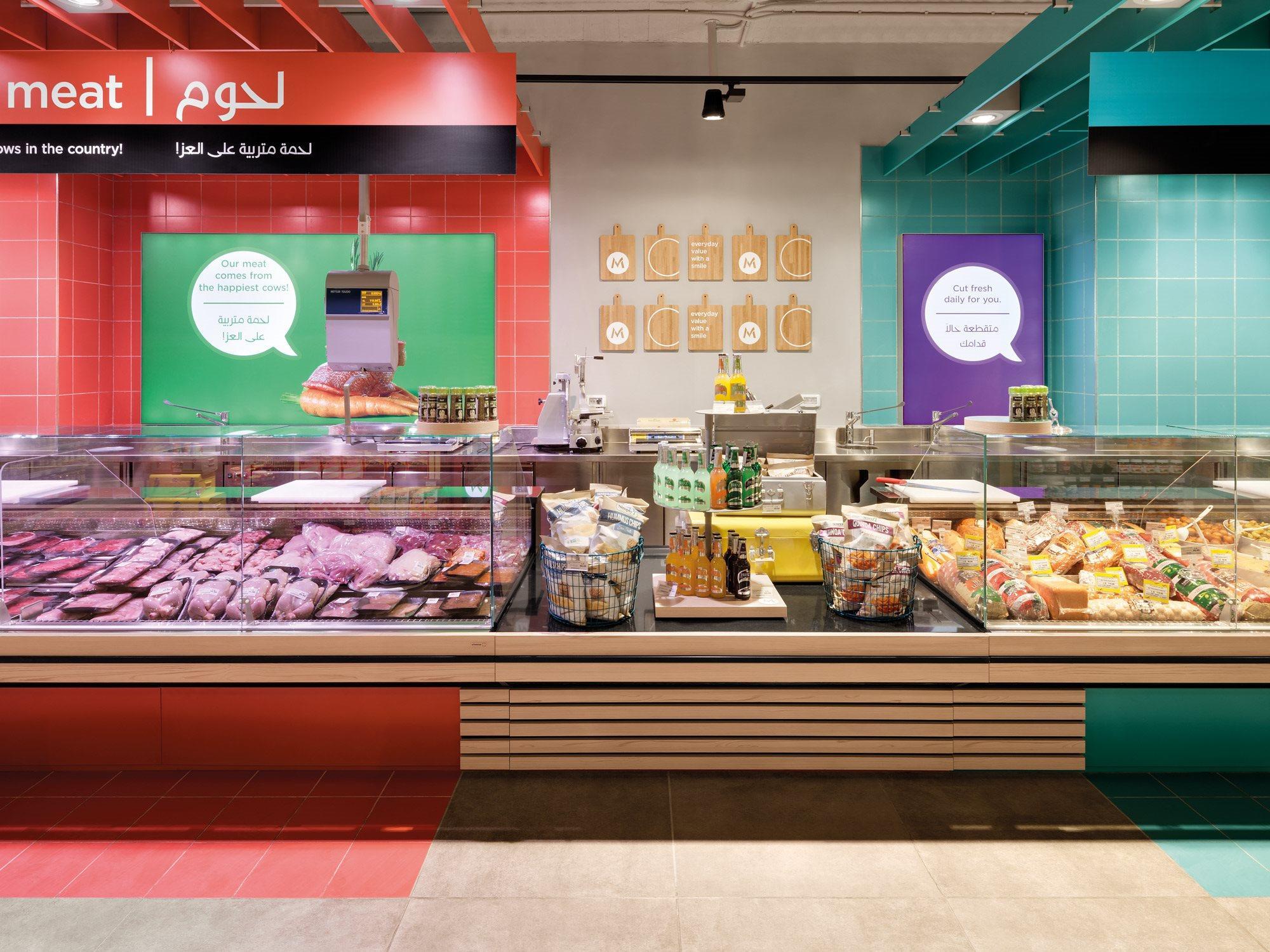
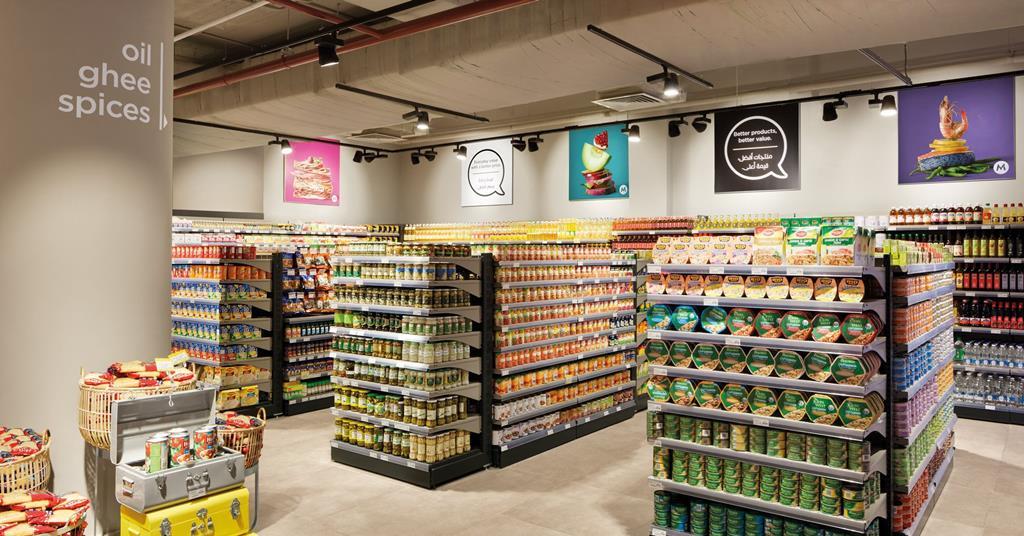
Metro represents the structured local supermarket model.
Smaller footprint than hypermarkets.
Stronger neighborhood positioning.
Mid-income consumer focus.
Metro operates in the space between informal trade and global hypermarkets.
It provides:
-
Organized retail experience
-
Assortment breadth without luxury positioning
-
Accessibility for daily urban consumers
This is Egypt’s middle-format resilience layer.
Spinneys Egypt – Premium Within Constraint

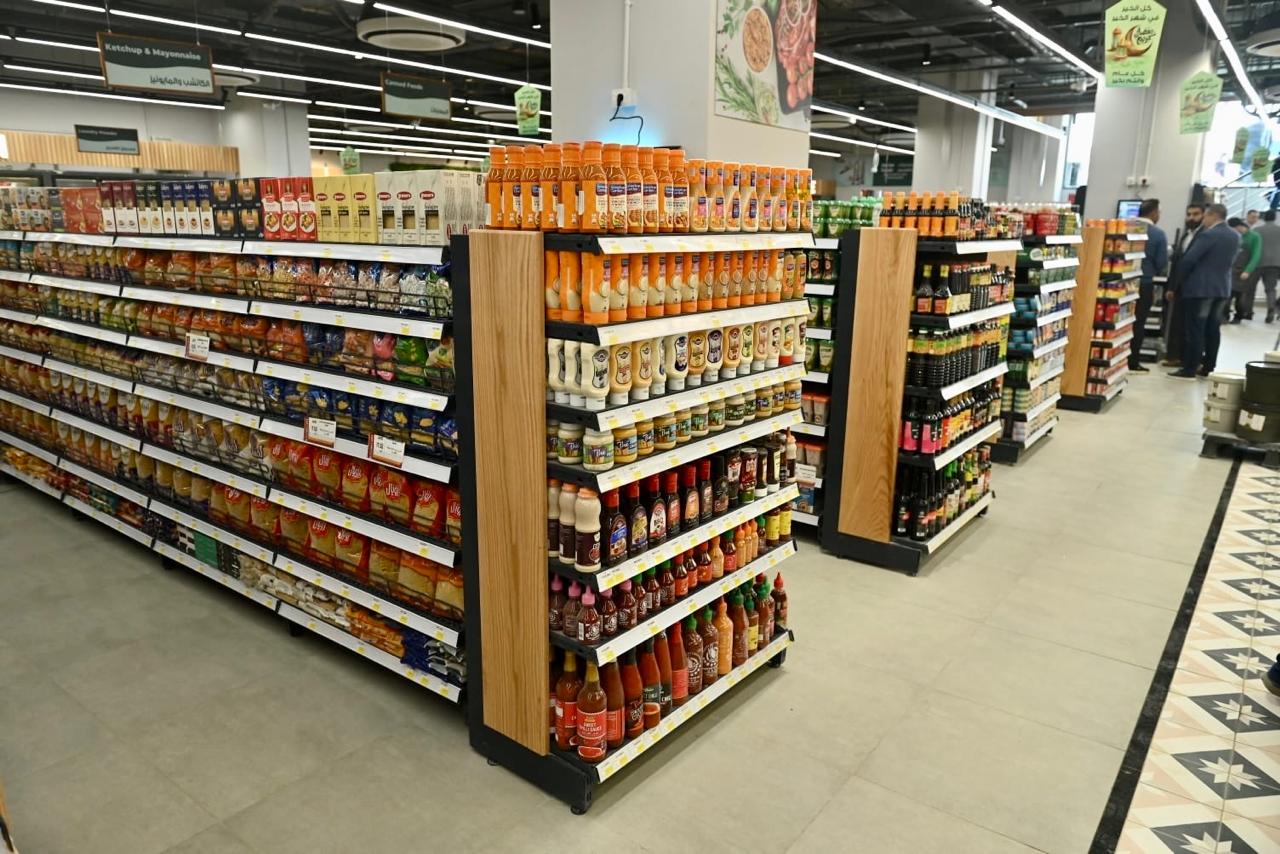

Spinneys targets higher-income segments.
It offers:
-
Larger imported assortment
-
Premium fresh categories
-
More curated in-store environment
But even here, pricing discipline remains essential.
Luxury retail cannot detach from macroeconomic reality in Egypt.
Private Label as Risk Management
In Egypt, private label is less about branding power
and more about:
-
Cost control
-
Margin protection
-
Import substitution
-
Consumer affordability
Retailers use private label to buffer volatility.
It is not just a category strategy —
it is financial risk management.
Government Influence & Food Security
Egypt’s food system includes heavy state involvement.
Subsidized food programs, price oversight, and import management influence how retailers operate.
Supermarkets are part of a broader ecosystem that ensures:
-
Bread availability
-
Essential staples access
-
Controlled inflation impact
Retail here interacts directly with national stability.
Few markets make this as visible as Egypt.
Density Without Discount Dominance
Unlike Turkey’s hard-discount saturation, Egypt’s density is more fragmented.
Small grocers remain everywhere.
Family-run shops still dominate neighborhoods.
Modern trade grows — but it does not fully displace tradition.
Instead, it layers on top.
Lessons for Global Retailers
Egypt teaches different lessons than Turkey:
-
Retail can function as social infrastructure
-
Hybrid channels can outperform forced modernization
-
Private label is strategic protection
-
Supply chain resilience matters more than store aesthetics
-
Price stability builds long-term trust
For operators expanding into emerging markets,
Egypt is a case study in scale under constraint.
Final Thought
Turkey showed us efficiency under pressure.
Egypt shows us resilience under responsibility.
Where Turkey engineered discipline,
Egypt manages equilibrium.
Supermarkets here do not merely compete.
They sustain.
And as we continue moving east,
the role of retail evolves again.
Next Stop: Saudi Arabia
From Egypt’s stabilization model,
we enter a market defined by transformation.
Next, we explore Saudi Arabia —
where Vision 2030, capital investment, and modern retail expansion are reshaping how food reaches consumers.
If Egypt is resilience,
Saudi Arabia is reinvention.
The world tour continues.
