




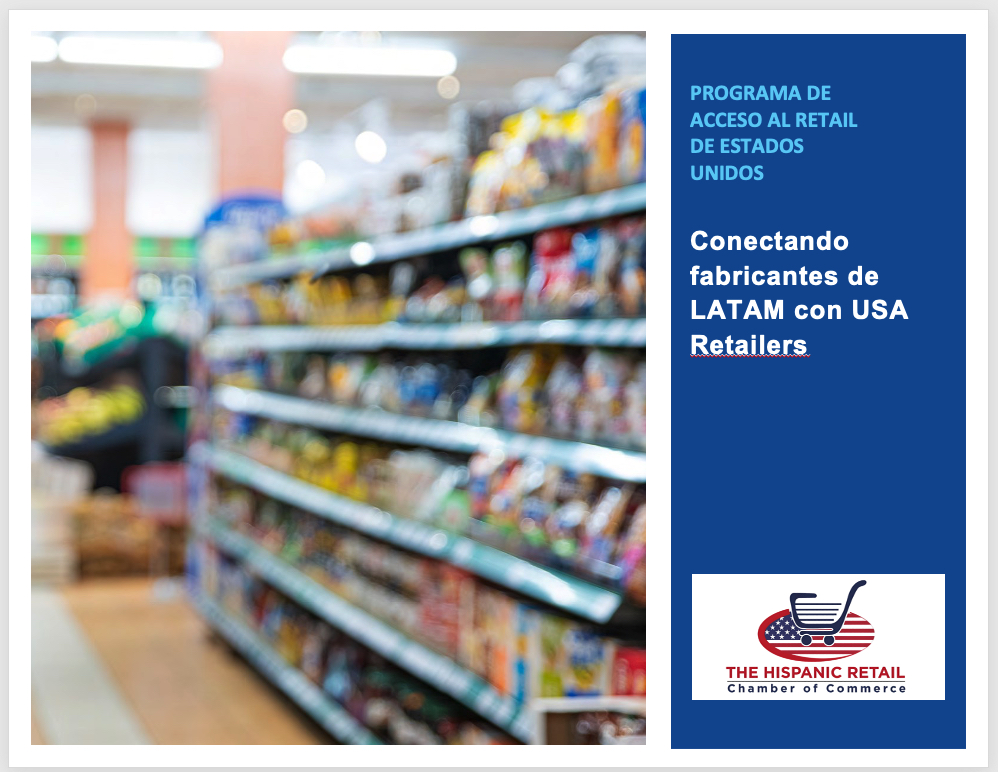
The Hispanic Retail Chamber of Commerce has introduced a structured initiative designed to facilitate the entry of Latin American manufacturers into the U.S. supermarket industry. The U.S. Retail Market Access Program aims to bridge the gap between companies ready to export and those prepared to operate successfully within the retail channel.
Entering the U.S. supermarket ecosystem requires more than logistics and export readiness. Manufacturers must align with regulatory standards, pricing structures, distribution systems, and category management expectations, while also developing strong brand positioning and commercial strategies.
According to the Retail Chamber’s research framework, many companies in Latin America have competitive products and production capabilities, but often lack direct access to buyers and a clear understanding of how supermarkets evaluate suppliers and categories.
The program addresses this gap through a retailer-oriented methodology structured around seven strategic pillars: product development, pricing, supply chain readiness, promotion, research and development, outreach, and partnership development.
This framework is designed to prepare suppliers not only to enter the U.S. market, but to build sustainable retail partnerships.
The initiative is supported by the broader ecosystem of the Hispanic Retail Chamber, including Retail Academy training programs, regulatory guidance through FDA agent services, the organization’s purchasing network, and industry platforms such as Diario Retail, Hispanic Retail Media TV, and the Grand Retail Show.
The program also responds to structural growth within the U.S. grocery sector. The Hispanic consumer market continues expanding, driving demand for authentic products, private label development, and innovation in better-for-you categories, while independent supermarkets remain a critical gateway for emerging brands.
Julio Ibanez, President of the Hispanic Retail Chamber of Commerce, explains the strategic vision behind the initiative:
“Exporting to the United States is only the first step. Selling successfully in supermarkets requires preparation, alignment with the retailer’s operating model, and a long-term commitment to category growth. Our role as the Retail Chamber is to connect manufacturers with the real decision-makers in the industry and guide them through that process.”
The program encourages suppliers to begin with pilot market introductions, support retailer promotional strategies, and scale production and logistics capabilities as distribution expands.
In the coming days, the Hispanic Retail Chamber of Commerce will announce the official presentation date of the program, which will be led by Daniel Esteban Novoa, Executive Vice President, and Julio Ibanez, President of the Hispanic Retail Chamber of Commerce, as part of the organization’s ongoing efforts to strengthen commercial connections between Latin America and the United States retail industry.
