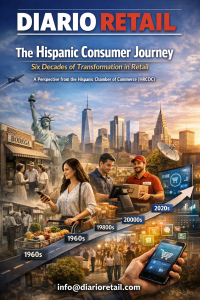




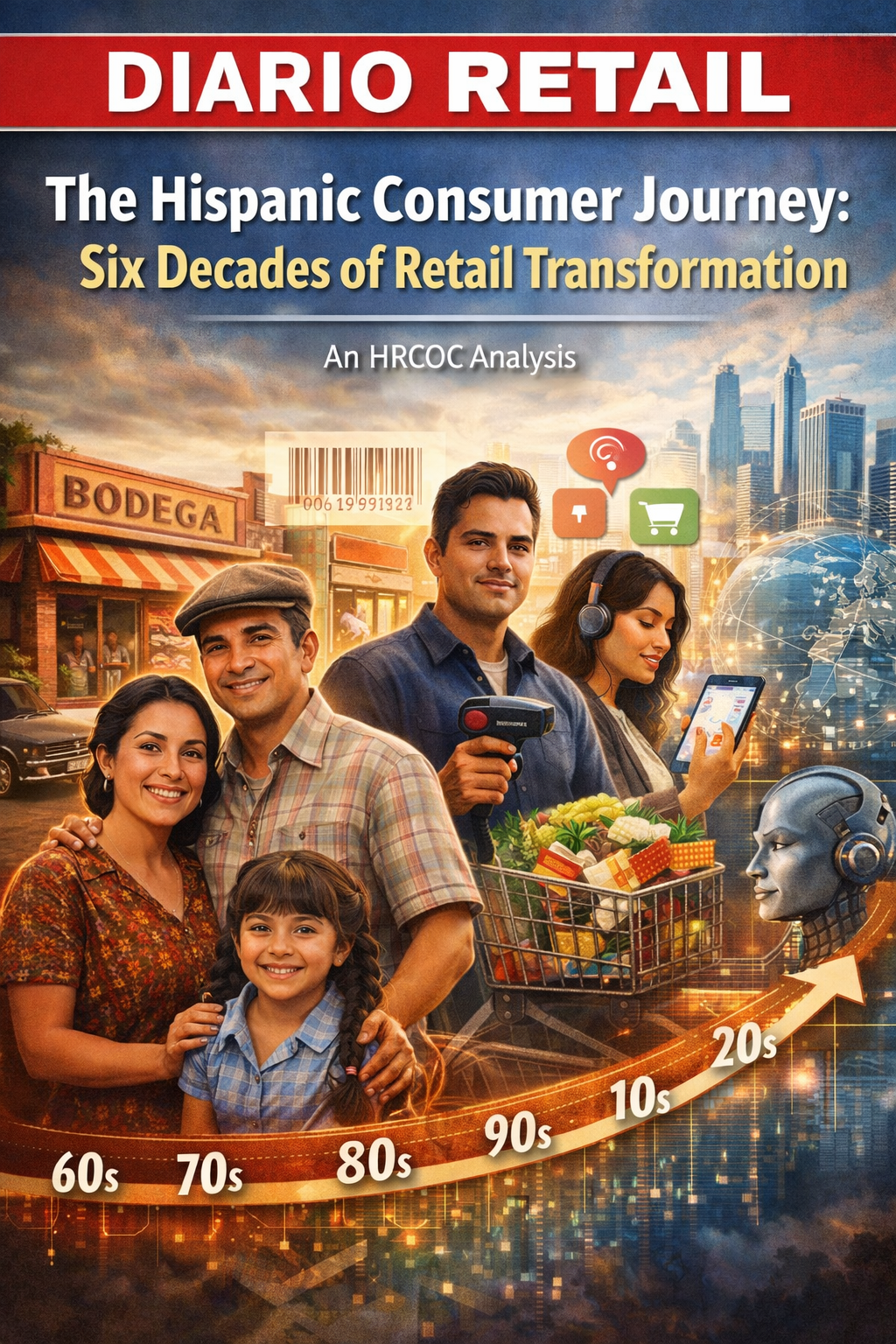
The Hispanic Consumer Journey: Six Decades of Retail Transformation
Expanded Strategic Analysis for Retail Insider Club Members
The Hispanic consumer in the United States is not merely a demographic segment—it is an economic ecosystem with cultural memory, habits passed down across generations, and a distinctive relationship with both physical and digital retail. Today, the Hispanic community represents approximately 19.5% of the total U.S. population, with more than 65 million people identifying as Hispanic or Latino, according to 2023 Census estimates. This makes Hispanics the largest ethnic minority in the country, with continued growth projected in the decades ahead.
Currently, 13 U.S. states have Hispanic populations exceeding one million residents, with particularly strong concentrations in California, Texas, Florida, New York, and Arizona. This geographic footprint places Hispanic consumers at the center of both regional and national retail dynamics.
Understanding how Hispanic consumer habits have formed and evolved—from the 1960s to the present—is essential for anyone seeking to operate, invest, or scale successfully within the U.S. retail market.
1960–1969 | Migration, Proximity, and Trust
During this decade, Hispanic immigration consolidated around major urban centers in the United States. Hispanic retail took shape through neighborhood stores, butcher shops, bodegas, and small supermarkets, which functioned not only as points of sale but also as community anchors.
Dominant technology: basic inventory systems and mechanical cash registers.
Key habit: frequent cash purchases, rooted in personal trust and community proximity.
1970–1979 | Self-Service and Adaptation
With the expansion of barcodes and self-service retail models, Hispanic consumers began engaging with larger retail chains while maintaining strong ties to local businesses.
Dominant technology: UPC codes and early stock-control systems.
Key habit: price comparison, combined with strong loyalty to culturally familiar retailers.
1980–1989 | Convenience and Dual Identity
Second-generation Hispanics came of age navigating two cultures—family heritage and mainstream U.S. society—shaping a hybrid consumer identity.
Dominant technology: electronic POS systems and improved logistics.
Key habit: seeking convenience and assortment, while preserving traditional products as cultural anchors.
1990–1999 | Information and Conscious Decisions
The rise of the internet introduced new ways to access information on prices, brands, and community trends.
Dominant technology: advanced information systems and loyalty programs.
Key habit: more deliberate purchase planning, larger weekly shopping trips, and a strong focus on value for money.
2000–2009 | Mobility, Remittances, and Financial Services
Mobile phones and electronic payment solutions reshaped the Hispanic retail experience.
Dominant technology: mobile phones, modern POS systems, in-store remittance services.
Key habit: the supermarket becomes a financial and community services hub.
2010–2019 | Omnichannel and Data
Hispanic millennials adopted digital platforms without abandoning brick-and-mortar stores.
Dominant technology: mobile apps, e-commerce, customer data analytics.
Key habit: digital comparison, social influence, and expectations of omnichannel consistency.
2020–Present | Intelligence, Purpose, and Community
Artificial intelligence and automation now redefine the shopping experience—without replacing the human dimension.
Dominant technology: applied AI, digital payments, automation.
Key habit: demand for cultural relevance, financial inclusion, transparent pricing, and purpose-driven values.
Geographic Diversity and Market Impact
The Hispanic population in the U.S. is highly diverse, with roots across Latin America. Approximately 61.5% of U.S. Hispanics are of Mexican origin, followed by Puerto Ricans, Central Americans, and South Americans.
By state, Hispanic population shares illustrate the community’s economic significance:
-
New Mexico: nearly 49% Hispanic
-
Texas and California: approximately 39% Hispanic
-
Arizona and Nevada: between 28% and 31%
-
Florida: around 25–26%
-
States such as Colorado, New Jersey, and New York also exceed 19–20%
These figures confirm that the Hispanic community is a regional and national economic engine, deeply embedded in both urban and suburban markets.
The HRCOC Perspective
“The Hispanic consumer does not adopt technology because it is trendy, but because it is genuinely useful. Every innovation integrated into retail must solve a real, everyday problem—saving time, protecting household income, or making life easier within the community,” says Daniel Esteban Novoa, Executive Vice President of the Hispanic Retail Chamber of Commerce (HRCOC).
“That is why physical retail remains central. It is a space of trust, services, and human connection. Technology that fails to understand this cultural logic rarely scales successfully within the Hispanic market.”
The Human Dimension of the Hispanic Community
Beyond statistics and trends, the Hispanic community in the United States is defined by deeply rooted values: solidarity, resilience in the face of structural change, strong family orientation, and a cultural inclination toward collective progress. This human capital is expressed not only in consumption patterns, but in the way Hispanic communities activate local economies, strengthen neighborhoods, and build long-term value across generations.
Conclusion
The Hispanic consumer has not changed in essence—the tools have changed. Each generation has adopted new technologies while preserving cultural foundations. Those who understand how technology, culture, and community intersect will be best positioned to build lasting relationships, scale sustainably, and generate real impact.
From The Hispanic Retail Chamber of Commerce (HRCOC), we continue working to translate data, culture, and operations into concrete opportunities for the U.S. retail ecosystem.