





Most people see supermarkets as places to buy food.
I’ve always seen them as systems.
Systems of trust.
Systems of efficiency.
Systems of culture.
That’s why I’m starting this series — A World Tour of Supermarkets — as a journey from East to West, exploring grocery chains around the world and the lessons they quietly teach about retail, communities, and long-term value creation.
And there was only one place where this journey could begin.
Spain.
Where my career in grocery truly started.
Where I learned that retail is not built from trends, but from discipline.
Why Spain matters in global grocery
Spain is often discussed through the lens of price competitiveness, private label penetration, or store density.
But its most important contribution to global grocery is subtler:
Spain mastered balance.
- Between efficiency and proximity
- Between private label and national brands
- Between growth and operational control
One retailer embodies that balance better than most.
Consum Supermercados
A cooperative that actually behaves like one
Consum is not a cooperative in name only.
It is cooperative by structure, by governance, and by daily behavior.
Employees are members.
Members are owners.
And ownership changes everything.
When people own the outcome, retail decisions slow down — in a good way.
- Expansion becomes deliberate
- Cost control becomes cultural
- Short-term wins stop dominating long-term health
Consum doesn’t chase headlines.
It builds systems that last.
Proximity is not nostalgia — it’s strategy
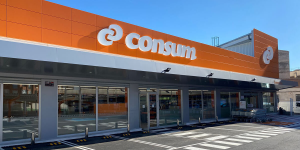
Consum’s stores are not designed to impress.
They are designed to work.
- Accessible locations
- Predictable layouts
- Familiar assortments
This is retail optimized for frequency, not spectacle.
And that matters, because most grocery trips are not emotional.
They are routine.
Consum understands that loyalty is built when shopping feels:
- Easy
- Reliable
- Familiar
Not when it feels theatrical.
Private label without aggression
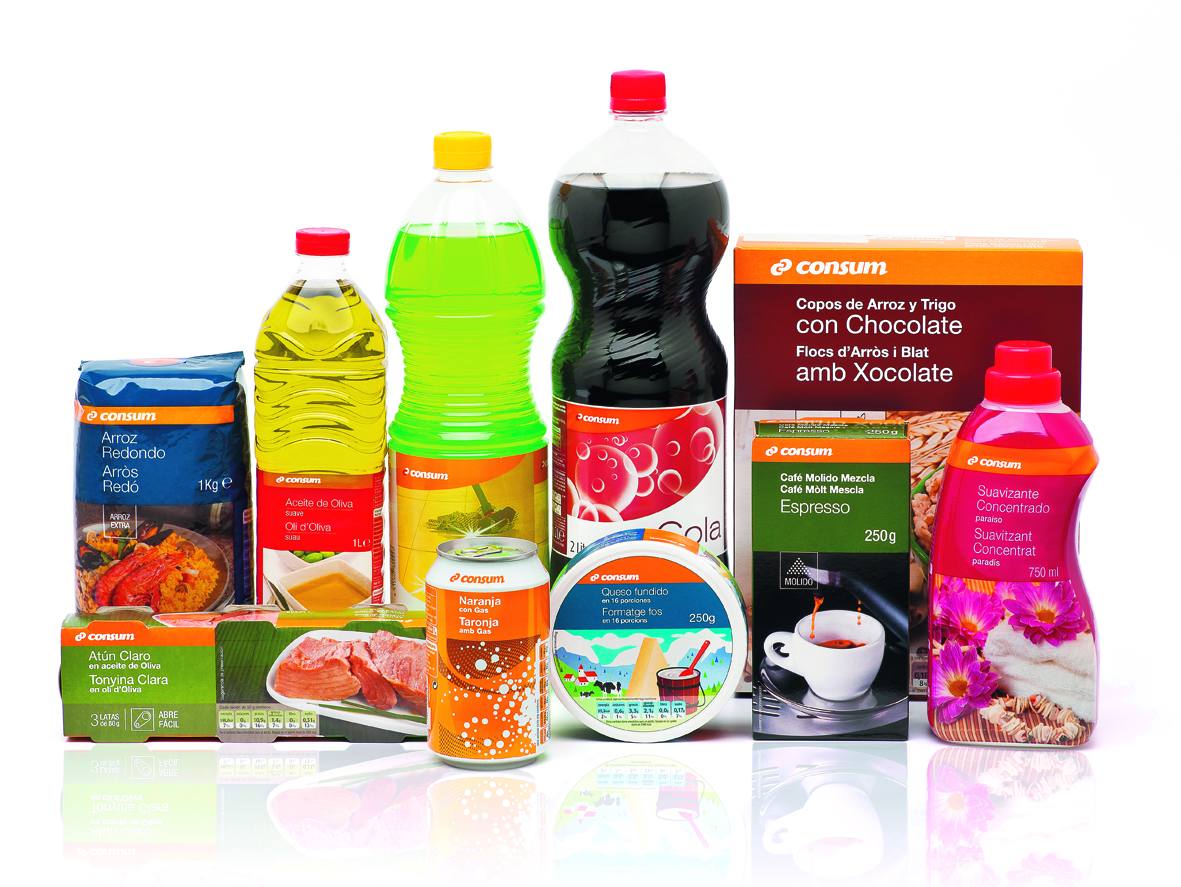
One of Consum’s quiet strengths is how it treats private label.
Private label here is not a weapon.
It’s a promise.
- Consistent quality
- Functional packaging
- Fair pricing
It doesn’t try to replace brands.
It complements them.
This approach avoids a mistake many retailers made:
turning private label into a source of tension instead of trust.
The power of operational calm
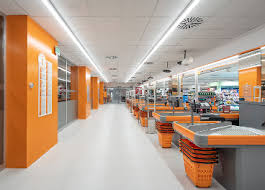
Walk into a Consum store and you’ll notice something unusual.
Nothing feels rushed.
Assortments are controlled.
Shelves are logical.
Labor feels stable.
This “boring” feeling is not accidental — it’s operational maturity.
And in grocery, boring often means profitable.
Operational calm shows up in:
- Lower shrink
- Better labor retention
- Higher customer confidence
Chaos may look dynamic.
But calm is what scales.
What Consum teaches beyond Spain
Consum is not trying to be global.
It is trying to be relevant.
And in doing so, it offers lessons that travel well:
- Ownership structure shapes retail behavior
- Proximity beats scale when frequency matters
- Private label should protect trust, not provoke conflict
- Operational discipline is a competitive advantage
- Growth is healthiest when it doesn’t rush
These lessons apply far beyond Spain.
That’s why starting here matters to me — not just professionally, but philosophically.
Spain is where I learned that great grocery retail is built from the inside out.
Coming next: Italy
In the next episode of A World Tour of Supermarkets, we’ll be flying to Italy 🇮🇹.
A market where:
- Food is culture
- Retail is emotion
- And supermarkets sit at the intersection of tradition and modernity
From cooperative discipline to culinary theater, Italy offers a fascinating contrast — and powerful lessons of its own.
We’re taking off soon.