





After analyzing Turkey where efficiency becomes a condition for survival the next logical step in this journey is to move into a fundamentally different type of market.
Egypt is not about efficiency.
Egypt is about velocity.
A velocity that often exceeds the system’s ability to sustain it.
And that’s exactly where the real lesson sits.
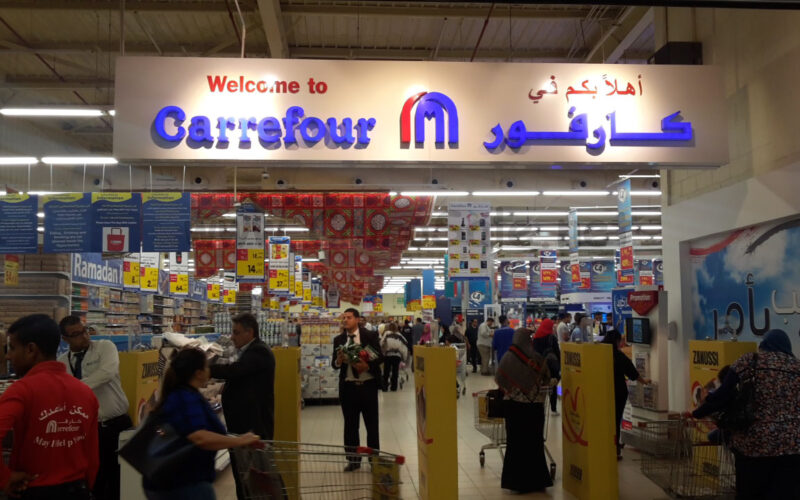
A MARKET THAT GROWS FASTER THAN IT ORGANIZES
Egypt is one of the largest consumer markets in the Middle East and North Africa, with a population exceeding 110 million people.
But size is not the story.
Structure is.
This is a market defined by:
- Rapid population growth
- Accelerated, often unplanned urbanization
- High price sensitivity
- Strong dominance of traditional trade
- A modern retail sector that is expanding — but still structurally immature
This creates a reality many overlook:
Modern retail is not leading the market.
It is trying to catch up with it.
THE UNCOMFORTABLE TRUTH
In Egypt, demand is not the problem.
Structure is.
While developed markets compete on experience, differentiation, and efficiency, Egypt operates on more fundamental drivers:
- Availability
- Affordability
- Accessibility
If you misread this, you misprice, you oversort, and you lose.

DISCOUNT IS NOT A STRATEGY — IT IS THE SYSTEM
The rise of discount formats in Egypt is not a trend.
It is an inevitable response to economic reality.
Operators such as:
- BIM (leveraging its Turkish model internationally)
- Kazyon
- Metro / Khair Zaman
are gaining share because they align with the only thing that truly matters in this environment:
Economic survival at the household level.
Consumers are not trading up.
They are managing down.
If you approach Egypt with a premium-first mindset, you are solving the wrong problem.
WHERE MARGIN IS ACTUALLY BUILT — AND DESTROYED
This is where most external operators fail.
They try to apply structured-market logic to an unstructured environment.
In Egypt:
Margin is built through:
- High rotation on core essentials
- Extreme assortment discipline
- Tight operational cost control
Margin is destroyed through:
- Assortment overreach
- SKU proliferation
- Weak supply chain execution
- Lack of operational discipline at store level
This is not theoretical.
This is daily operational reality.

THE STRATEGIC MISTAKE EVERYONE MAKES
The biggest mistake is assuming Egypt is simply an “emerging market” that will eventually resemble Europe or the United States.
It won’t — at least not in any linear way.
Egypt will evolve, but on its own terms:
- Informal trade will remain relevant longer than expected
- Traditional retail will continue to dominate large portions of consumption
- Price will remain the primary decision driver
If your strategy depends on the market becoming more structured before you adapt — you are already behind.
THE REAL LESSON FOR INTERNATIONAL RETAILERS
Egypt forces a fundamental reset:
There is no universal retail model.
What works in structured markets does not translate directly into high-growth, low-structure environments.
Execution here is not about sophistication.
It is about adaptation speed and operational simplicity under pressure.
CLOSING
Turkey showed us that efficiency is the foundation of survival.
Egypt shows us something more uncomfortable:
There are markets where growth happens before structure.
And in those markets, the winners are not the most advanced operators.
They are the ones who adapt fastest to reality — not to theory.
NEXT EPISODE
In the next chapter, we will pause this international journey.
We will take a step back to analyze the supermarket landscape in the United States.
And then, we will continue our world tour.
