




Italy is not just a country.
It is a mosaic of regions, traditions, dialects, and identities—and nowhere is that more evident than in its supermarkets.
Unlike much of Europe, where consolidation and financialization have diluted ownership and decision-making, Italy has preserved something increasingly rare in modern retail: family leadership at scale.
Here, supermarkets are not anonymous chains.
They are extensions of territory, culture, and long-term family vision.
This is Italy—where family still runs the supermarket.
Retail as Territory, Not Just Distribution
To understand Italian grocery retail, one must first understand Italy itself.
Consumption is regional.
Loyalty is local.
And food is identity.
Italian shoppers do not buy groceries solely based on price or promotion. They buy trust. They buy familiarity. They buy continuity. And those values align naturally with family-owned and family-controlled retail models.
In Italy, the supermarket is not merely a point of sale—it is a community institution.
The Strategic Advantage of Family Ownership
Family leadership in Italian retail is not nostalgic—it is strategic.
Family-controlled retailers benefit from:
- Long-term decision-making
- Deep supplier relationships, often spanning generations
- Strong private label philosophies rooted in pride, not margin alone
- Operational discipline without quarterly-market pressure
While global retailers optimize for scale, Italian family retailers optimize for permanence.
And no company represents this better than Esselunga.
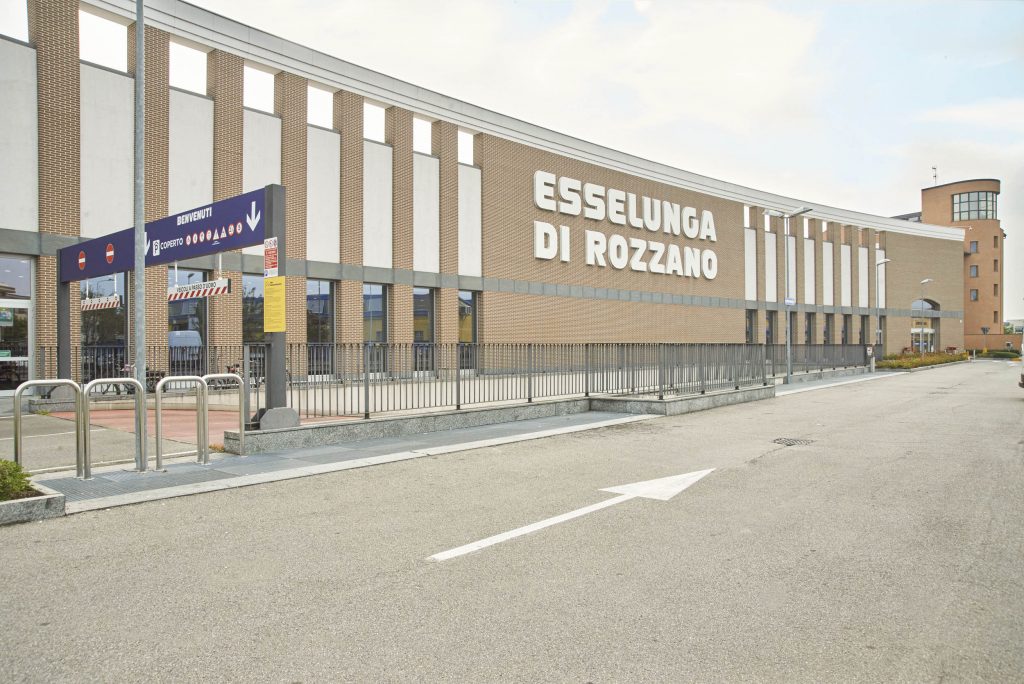
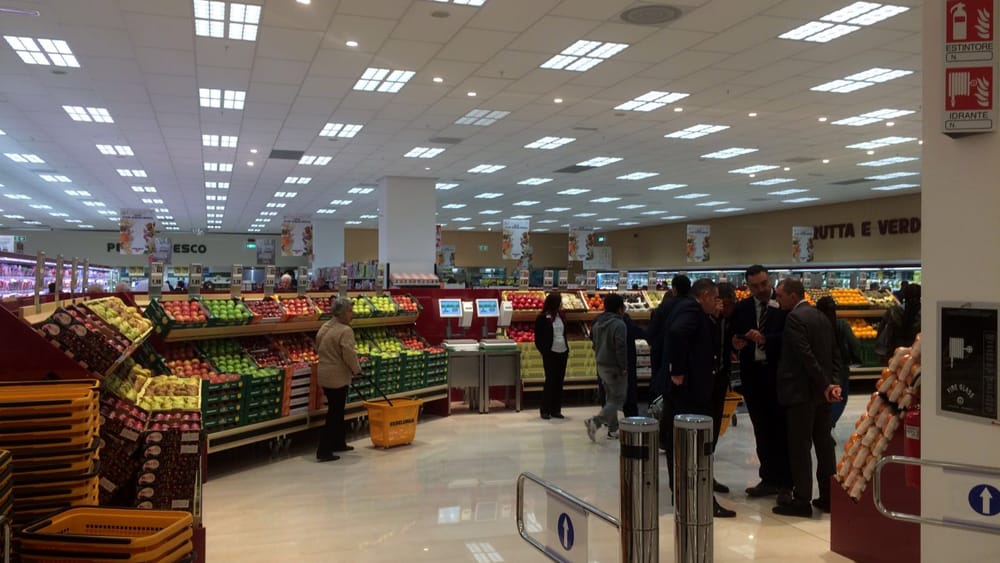
Esselunga: The Gold Standard of Family Retail
Founded in 1957 by Bernardo Caprotti, Esselunga is one of the most admired supermarket chains in Europe—and one of the most misunderstood from the outside.
Esselunga is not flashy.
It does not franchise.
It does not chase trends.
Instead, it executes relentlessly.
Still under family control, Esselunga has built its reputation on:
- Exceptional operational efficiency
- One of the strongest private label programs in Europe
- Disciplined assortment strategy
- A loyal, urban, demanding customer base
In many ways, Esselunga represents what happens when family ownership meets industrial-grade execution.
For U.S. readers, the closest comparison might be a blend of Trader Joe’s focus with Wegmans’ operational rigor—but with a distinctly Italian soul.
Esselunga proves a critical point:
Family ownership does not limit scale. Poor governance does.
Conad: A Confederation of Families
If Esselunga represents centralized family control, Conad represents the power of families operating together.
Conad is a cooperative of independent retailers—many of them family-owned businesses—united under a shared brand, purchasing structure, and strategic vision.
Each store owner retains:
- Local ownership
- Regional decision-making power
- Deep community roots
Yet together, they compete at national scale.
Conad is not a chain in the traditional sense.
It is a federation of family entrepreneurs.
This model reinforces a powerful idea: independence and scale are not mutually exclusive when structure is designed intelligently.

Italy vs. the Rest of Europe
Across much of Europe, retail ownership has shifted toward:
- Financial groups
- Institutional capital
- Shorter investment horizons
Italy resisted.
Why?
Because Italian retail leaders understood something early on:
Once ownership is lost, culture follows.
By preserving family control—whether centralized like Esselunga or distributed like Conad—Italian retailers protected their decision-making autonomy, supplier ecosystems, and brand identity.
A Quiet Parallel with Spain
There is an interesting parallel between Italy and Spain, explored in Episode 1.
Spain’s Mercadona professionalized the family model through centralized execution.
Italy diversified it—allowing multiple family structures to coexist.
Different paths.
Same principle.
Ownership matters.
Lessons for the United States
For independent and Hispanic retailers in the U.S., Italy offers a powerful lesson:
The future does not belong exclusively to scale or private equity.
It belongs to ownership with purpose.
Italian supermarkets show that:
- Family control can coexist with world-class execution
- Private label can be an expression of identity, not just margin
- Long-term thinking outperforms short-term optimization
In an era of consolidation, Italy reminds us that retail is not just about selling products—it is about stewarding trust across generations.
Final Thought
Italy did not preserve family-owned supermarkets by accident.
It did so by choice.
And in doing so, it protected something invaluable:
the connection between food, people, and place.
In Italy, the supermarket is still run by families.
And that may be its greatest competitive advantage.
Next Stop: Turkey
Italy shows us how family ownership can scale without losing identity.
But moving east, the conversation changes.
From the structured elegance of Italian retail, the journey continues toward a market where modern supermarkets, traditional commerce, and aggressive discount models coexist in constant tension.
Our next destination is Turkey—a bridge between Europe and Asia, where retail is shaped by:
- Rapid urbanization
- Price-sensitive consumers
- Powerful national champions
- And a unique balance between tradition and hyper-efficiency
In Turkey, supermarkets are not just places to shop.
They are instruments of economic resilience, cultural transition, and national scale.
In Episode 3, we land in Turkey to explore how local giants like Migros, BİM, and Şok reshaped grocery retail for a population of over 85 million—while redefining the meaning of efficiency, price leadership, and reach.
From family legacy to mass-market discipline,
the world tour continues—always moving east.
Next stop: Turkey.
