




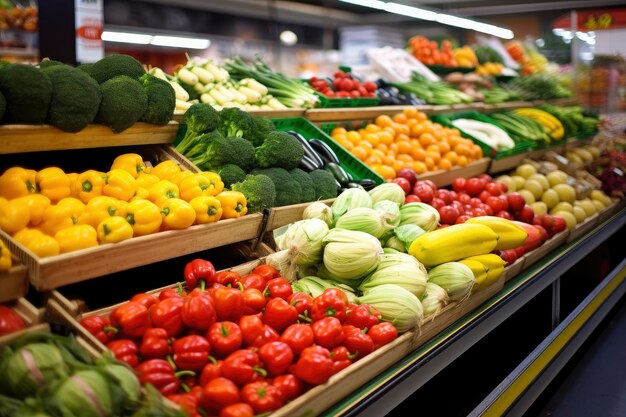
The way consumers shop for fresh produce is changing, making merchandising in the grocery retail sector increasingly complex. Shoppers are no longer loyal to a single channel; instead, they compare, rotate, and choose stores based on each specific shopping mission.
According to The Power of Produce 2025 report published by FMI — The Food Industry Association, 22% of consumers said they purchased fresh fruits and vegetables across more channels during a typical month in 2024 compared to the previous year. This shift contributed to a decline in dollar sales for traditional supermarkets, while growth was recorded in mass merchants and supercenters, club stores, discount grocers, and health and organic specialty retailers.
The report highlights five key attributes consumers associate with a strong produce department: competitive pricing, freshness and quality, in-stock availability, clear price signage, and compelling promotions. Additionally, 61% of consumers who shop at two or more stores say freshness is the primary factor determining store choice on each trip.
This growing tendency to shop across multiple outlets is pushing retailers to refine their marketing and merchandising strategies in order to retain or grow market share. Russell Zwanka, associate professor of food marketing and director of the food marketing program at Western Michigan University, notes that the most effective selling strategies vary depending on consumer behavior and expectations within each channel.
Traditional supermarkets, Zwanka explains, can leverage their broader produce assortments, as their shoppers tend to spend more per trip and expect a wide range of fruit and vegetable options. In contrast, limited-assortment retailers such as Aldi and Trader Joe’s attract shoppers seeking exclusive items, private-label products, and limited-time offerings.
Club stores present a different challenge. “They focus on treasure-hunt shopping and pantry loading and are often the most difficult formats for selling produce,” Zwanka says, citing the higher risk of food spoilage at home when products are purchased in bulk.
The takeaway is clear: there is no one-size-fits-all approach. “Retailers should merchandise produce with messaging that aligns with their unique value propositions and customer expectations,” Zwanka emphasizes. In short, retailers must focus on what they do best.
From an industry leadership perspective, Daniel Esteban Novoa, Executive Vice President of The Hispanic Retail Chamber of Commerce (HRCOC), believes this fragmentation of produce shopping should be viewed not only as a challenge but as a strategic opportunity.
“The traditional supermarket still holds a critical advantage that many other formats struggle to replicate: consumer trust in freshness, product expertise, and deep community connection,” Novoa says.
He adds that the real challenge lies in elevating the professionalism of produce management and communicating that value more effectively. “Today’s shopper is not just comparing prices; they are comparing experience, consistency, and credibility. Retailers that structure their produce strategy around data, local sourcing, and clear health-and-wellness messaging will regain relevance, even in a highly multichannel environment,” Novoa concludes.
As consumers become more informed and less loyal to a single channel, the produce department once again emerges as a key battleground for strategic differentiation in grocery retail.
