



Operational Trends and Consumer Behavior Analysis (2025)
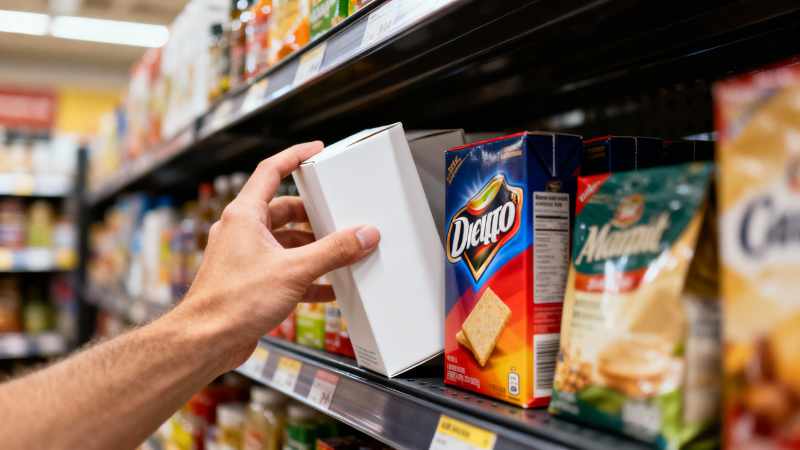
The packaged consumer goods (CPG) retail sector is undergoing a market restructuring that goes far beyond traditional cyclical adjustments. Private Label (PL) has solidified its position as a structural megatrend—evolving from a mere low-cost alternative into a fundamental strategic growth engine.
Global and U.S. data confirm this ascendancy. Private label sales in the United States reached a record volume of $271 billion in 2024, with total revenues projected to approach $280 billion in 2025, marking an all-time high. During the first eleven months of 2025, PL dollar sales grew by 3.6%, significantly outpacing national brands, which advanced by only 1.1%. In mature markets like Europe, private label already accounts for 39% of the total grocery market by value.
The Dual Catalyst: Inflation and Quality Loyalty
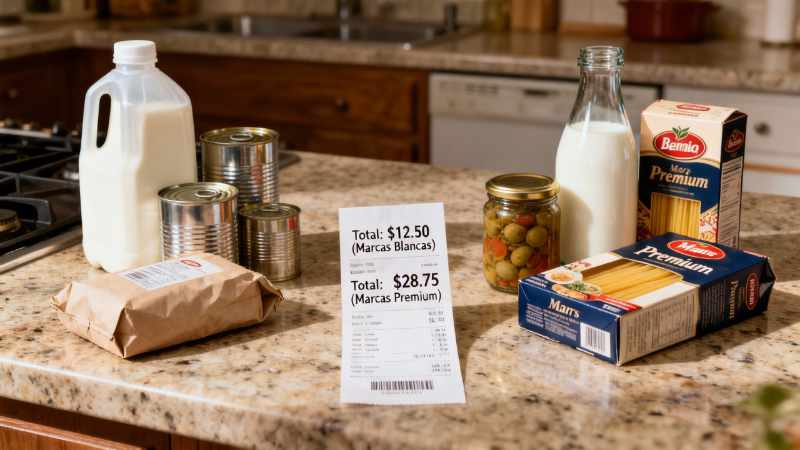
The initial spark for this acceleration was persistent inflation, which dramatically widened the price gap. The average cost of a comparable national brand product is now over $2 higher than its private label counterpart—a differential that has grown by 38% since 2019. This economic environment compelled consumers to “trade down” toward more affordable alternatives.
However, shoppers who migrated for price stayed for quality. Perceptions of private label quality have improved substantially since the 2008 recession, and today 68% of global respondents consider private label a high-quality alternative to national brands. This retention points to long-term, structural brand loyalty.
Notably, adoption is being led by younger demographics: Gen Z (44%) and younger Millennials (39%) are the most likely to try private label products for the first time. These cohorts seek not only value but also innovation and authenticity—forcing retailers to position their private labels not as generics, but as full-fledged brands in their own right.
Lidl: The Axis of Operational Efficiency
The new competitive advantage in retail no longer hinges solely on price negotiation but on uncompromising operational excellence. The discount model—exemplified by Lidl (part of Schwarz Group, the world’s third-largest retailer)—demonstrates that low cost is a direct consequence of extreme efficiency.
Lidl U.S. CEO Joel Rampoldt sums up their strategy in an operational mantra: “Simple → Fast → Low Cost.”
Private Label Dominance: Approximately 80% of Lidl’s U.S. assortment consists of private label, granting the retailer strict control over sourcing and input costs.
Curated Assortment: The company has reduced its core SKU count in the U.S. from 4,500 to around 3,250. This simplification not only lowers operational complexity but also maximizes purchasing volume to sustain low prices.
Technology Investment: The rollout of electronic shelf labels across all stores eliminates manual price changes, saving dozens of labor hours per store each week.
Lidl’s customer experience is equally streamlined: it prioritizes freshness in the “first 90 feet” of the store (bakery, produce, proteins) and speed in the “last 90 seconds” (checkout).
The Logistics Bridge: Shelf-Ready Packaging (SRP)
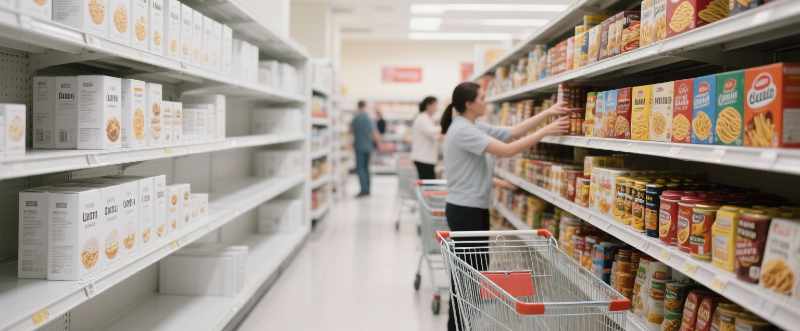
The indispensable logistical lever that sustains this low-cost model is Shelf-Ready Packaging (SRP). Rampoldt describes it as “essential to our model.”
SRP is designed so that transit packaging can be placed directly onto shelves with minimal handling. Its greatest benefit is labor cost reduction—labor can account for up to 25% of a retailer’s total costs, and SRP can cut restocking time by 30–40% compared to traditional cartons. As industry experts note: “Why stack one can at a time when you can place a tray of 12 at once?”
This efficiency extends beyond internal operations. SRP is now a supply chain requirement: 80% of major retail chains either request or mandate it from suppliers. This logistical imperative shifts the burden of labor efficiency from retailer to manufacturer, compelling CPG brands to adapt if they wish to maintain shelf presence.
Reflection: The Imperative of Radical Differentiation
The rise of private label is no longer a battle for the bottom of the price pyramid—it’s a contest for superior value across all tiers, including the premium segment, which now accounts for 40% of total U.S. private label spending.
For CPG manufacturers, the lesson is clear: the “safe middle” of the market is vanishing. They must avoid commoditization in categories where private label is strong and instead invest in radical differentiation through innovation, authenticity, and undeniable quality to justify a price premium. Moreover, they must embrace logistical efficiency standards like SRP to secure their place in a retail ecosystem now engineered as a precision low-cost machine.
The future of retail belongs to those who can make operational excellence feel simple, fast—and, crucially, affordable for the end consumer.
